-
Products
-
![]() Storage & Logistics Equipment
Storage & Logistics Equipment
- All Products
-
Featured Products
Featured Products
- Used Products
-
![]() Racking & Storage Systems
Racking & Storage Systems
- All Storage Systems
- Racking Inspections and Repairs
- Safety, Process & Maintenance
- Warehouse Transfer Rentals
-
![]() Rental Equipment
Rental Equipment
- Equipment To Rent
-
![]() Manufacturing
Manufacturing
- Plastic Box Manufacturing
- Roll Pallet Manufacturing
- Stillages Manufacturing
-
![]() End-to-End Service
End-to-End Service
- The Full Product & Service Offering
-
- Rental
- Industries
- About
- News & Insights
- FAQs

















New, Used or Rented: Choosing the Right Warehouse Equipment Procurement Model
Warehouse operations rely on equipment that simply has to work. Forklifts, conveyors, roll pallets and pallet jacks keep goods moving, but tying up capital in equipment you don’t fully need can put real strain on a business’s liquidity. Get the buying decision wrong, and you either overspend on assets sitting idle or underinvest in equipment your warehouse actually depends on.
This is exactly why knowing how to choose the right procurement method matters as much as the equipment itself. There are three main routes available to most warehouses: buying new, buying used, or renting. Each one carries its own costs and trade-offs, and understanding the differences between these procurement methods is the starting point for any sound decision. Plenty of warehouse managers only start researching how to choose the right procurement method once a piece of equipment has already failed, but planning puts you in a far stronger position.
This guide sets out a clear framework for how to choose the right procurement method based on your budget, how often you’ll use the equipment, your technology needs, and where your business is heading. Whether you run a retail distribution centre, a manufacturing site, or a wholesale operation, the same procurement methods apply, even if the right answer looks different for every warehouse.
Understanding the Core Equipment Procurement Methods
Before working out how to choose the right procurement method for your warehouse, it helps to understand exactly what each option involves. Here’s how the three core procurement methods break down and how each one affects day-to-day operations.
Buying new
Buying new means purchasing factory-fresh machinery outright. You get the latest technology, a full manufacturer warranty, and zero wear and tear from the day it arrives. Of the three procurement methods, this is the most straightforward, but it also asks the most of your budget upfront.
Buying used
Buying used means acquiring pre-owned equipment at a discounted price. You’ll pay considerably less than you would for new equipment, although you take on some risk around wear and tear and an unknown maintenance history. For many warehouses, this is a practical middle ground between cost and capability.
Renting
Renting is a flexible, short-term or seasonal agreement to use equipment owned by a third-party vendor. There are no long-term commitments and no assets on your balance sheet, just access to the equipment for exactly as long as you need it. Of the three procurement methods, this is generally the one with the lowest financial risk attached.
Understanding these three definitions is the first step in choosing a procurement method that genuinely fits your warehouse’s goals, rather than defaulting to whichever option feels most familiar.
Choosing The Right Procurement Method for Your Warehouse
Once you understand the basics, the next step is working out which option suits your business. Here’s a practical framework built around four operational pillars to guide how to choose the right procurement method with confidence.
Utilisation rate and frequency
Start by asking how often the equipment will actually be in use. If you expect to run it for more than 30 hours a week, buying new or buying used usually makes more financial sense, since the equipment earns its keep. If your need is sporadic, seasonal, or tied to a specific project, renting tends to be the smarter route. There’s little benefit in owning a forklift that sits idle for nine months of the year, and recognising this early on makes choosing a procurement method far easier.
Financial liquidity
Look closely at your cash flow. Can your business comfortably absorb the upfront cost of ownership, or is it safer to preserve capital and pay a predictable monthly cost instead? Buying new or used shifts spending into capital expenditure (CapEx), while renting keeps it as operational expenditure (OpEx). Neither is inherently better. It comes down to what your balance sheet can take and how much risk you’re willing to carry, which is precisely why how to choose the right procurement method depends so heavily on your own financial position.
Technology and compliance requirements
If your facility depends on the latest warehouse management system (WMS) integration, or you’re investing in automated guided vehicles (AGVs), buying new is usually the better fit. New equipment tends to come with the most current safety features, software compatibility and compliance certification already built in. WMS adoption is now standard across logistics operations, which means compatibility between new equipment and your existing systems matters more than ever, particularly if you’re scaling up or automating. Technology requirements like these can make choosing a procurement method fairly clear-cut, even before you look at cost.
Maintenance capabilities
Understand what your team can realistically manage. If you don’t have an in-house mechanical or maintenance team, renting removes a significant burden as rental agreements typically include repairs and breakdown cover. If your warehouse already has strong maintenance capability, buying new or used gives you more control over upkeep and scheduling. This pillar alone often settles how to choose the right procurement method for smaller operations without a dedicated maintenance function.
Working through these four pillars gives you a structured way of choosing a procurement method, rather than guessing based on price alone. As the decision-maker, you’re weighing usage, cash flow, technology and in-house capability all at once, and the framework above is designed to make that easier.
The Pros and Cons of Buying New Warehouse Equipment
Pros:
- Longer lifespan and maximum operational longevity.
- Full manufacturer warranty, reducing the risk of unexpected repair bills.
- Access to the latest safety features and automation technology.
- Better energy efficiency, including modern lithium-ion forklifts.
Cons:
- Highest upfront capital expenditure among the three procurement methods.
- Equipment starts depreciating the moment it’s delivered.
- Longer lead times for custom-manufactured or bespoke equipment.
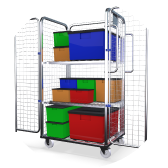
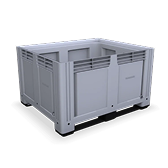
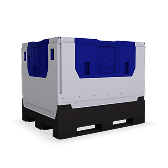
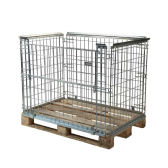
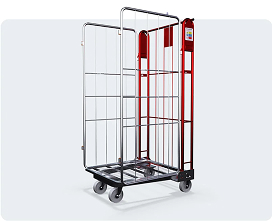
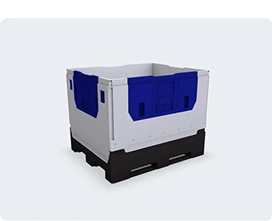
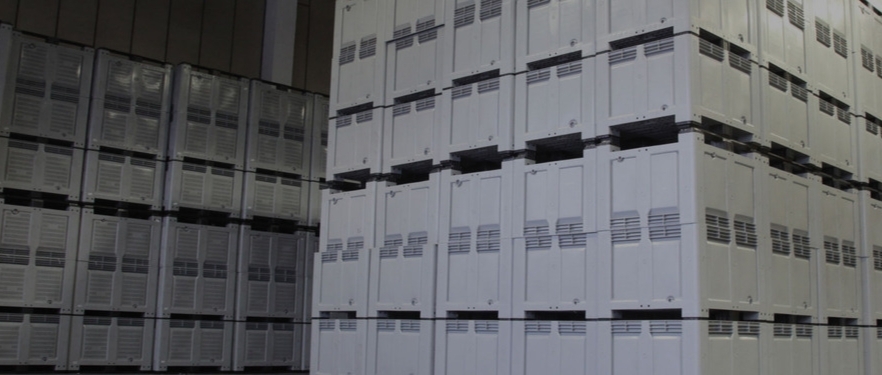
Buying new tends to suit warehouses running high-volume, 24/7 continuous operations, where downtime simply costs too much to risk. If you’re upgrading your fleet, Palletower’s pallet box range is a popular starting point, alongside our wider range of roll pallets and roll cages built for continuous, high-throughput use.
The Pros and Cons of Purchasing Used Equipment
Pros:
- Significant cost savings, often 30 to 50% cheaper than buying new.
- Immediate availability, with no lengthy manufacturing lead times.
- Slower depreciation than new equipment, since most of the value drop has already happened.
Cons:
- Maintenance history can be unknown or inconsistent.
- Shorter remaining operational lifespan.
- No comprehensive modern warranty in most cases.
- Older technology can be harder to source replacement parts for.
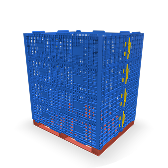
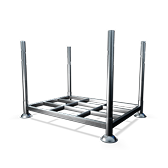
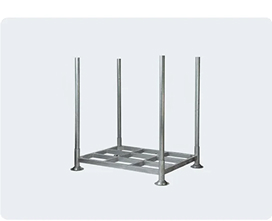
This route suits warehouses that want to scale up capacity quickly on a tighter budget, or that need secondary equipment that isn’t central to day-to-day throughput. It’s a good illustration of how to choose the right procurement method, since the decision often comes down to weighing cost against criticality. Palletower’s own used equipment range includes roll pallets, stillages, box and cage pallets, and plastic containers. We inspect and refurbish every unit before sale, so you’re not trading away reliability to save money.
The Pros and Cons of Renting Warehouse Equipment
Pros
- Low upfront cost, with no large capital outlay.
- Shifts spending from CapEx to a predictable OpEx model.
- Rental agreements typically cover maintenance and breakdown repairs.
- Maximum flexibility to scale up for peak periods (Q4, for example) and scale down once demand drops.
Cons:
- Can work out more expensive in total if rented indefinitely.
- You build no equity in the asset, since you never own it.
- You depend on the rental vendor’s fleet availability and response times.
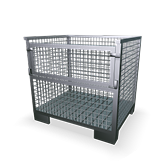
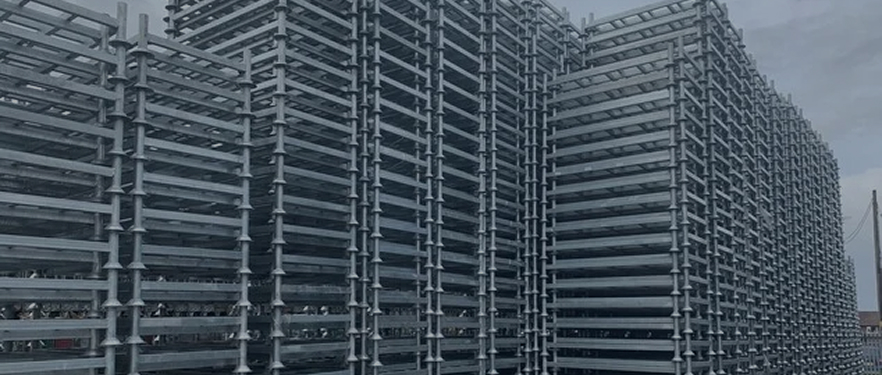
Renting is the natural choice for short-term projects, seasonal spikes, or businesses trialling a new operational workflow before committing to it long-term. Of all the procurement methods covered here, it’s the one best suited to fast-changing demand. Palletower’s rental equipment covers roll pallets, stillages, hypacages and plastic box pallets, with stock ready to go the same day and full repair and maintenance support included, giving you a genuinely flexible alternative to ownership without the long lead times.
Depending On Your Business’s Procurement Model, Palletower Provides New, Used and Rented Storage and Logistics Solutions
There’s no single correct answer when it comes to choosing a procurement method. The right choice depends on how often you’ll use the equipment, how much capital you can commit, and how your warehouse operates day to day. Some businesses settle firmly on one option, while others mix new, used, and rented equipment across different parts of their fleet, depending on the job at hand.
Whichever direction suits you, Palletower can help. We supply new, used and rental storage and logistics equipment from UK stockholding, so you get fast availability whichever of the procurement methods you choose.
Still working through how to choose the right procurement method for your business? With over 60 years of experience helping warehouses across retail, manufacturing and wholesale, our team can find the right fit for your operation. Enquire now or contact us to discuss your requirements or browse our full range of storage and logistics equipment to see what’s available right now.