-
Products
-
![]() Storage & Logistics Equipment
Storage & Logistics Equipment
- All Products
-
Featured Products
Featured Products
- Used Products
-
![]() Racking & Storage Systems
Racking & Storage Systems
- All Storage Systems
- Racking Inspections and Repairs
- Safety, Process & Maintenance
- Warehouse Transfer Rentals
-
![]() Rental Equipment
Rental Equipment
- Equipment To Rent
-
![]() Manufacturing
Manufacturing
- Plastic Box Manufacturing
- Roll Pallet Manufacturing
- Stillages Manufacturing
-
![]() End-to-End Service
End-to-End Service
- The Full Product & Service Offering
-
- Rental
- Industries
- About
- News & Insights
- FAQs















Food Warehousing: What Storage Equipment Meets the Requirements?
- Storage Solutions
Storing food isn’t the same as storing any other product. Hygiene, traceability, and contamination control sit at the centre of every decision, and a single lapse can affect an entire batch or an entire brand’s reputation.
That’s what makes food warehousing so different from general warehousing. Every process, from goods-in to dispatch, needs to protect product integrity as well as space and speed.
Food grade warehousing depends on more than clean floors and tidy shelves. It relies on choosing the right storage and handling equipment to support your cleaning procedures and day-to-day warehouse management. Food warehousing standards set out the operational practices that businesses should follow, but it’s the hygienic storage equipment you use that determines how easily you can meet compliance and how efficiently you can run your site.
What Is Food Warehousing?
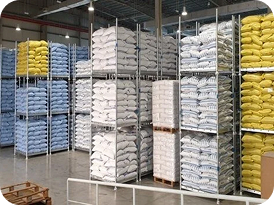
Food warehousing is the storage and handling of food products as they move through the supply chain, from the moment they arrive at a facility to the moment they leave for their next destination. It sits at the heart of the food supply chain, connecting suppliers, manufacturers, retailers and, ultimately, consumers. That’s true whether you’re running a retail distribution centre, a manufacturing site handling raw ingredients, or a wholesale operation moving bulk stock.
It covers several connected stages:
- Receiving: checking incoming stock for quality, temperature, and damage before it enters storage.
- Storage: holding products under the right conditions until they’re needed.
- Inventory management: tracking stock levels and locations accurately.
- Order picking: selecting the correct items, in the correct condition, for each order.
- Distribution: moving goods out to retailers, wholesalers, or end customers.
- Traceability: recording where every product has been, so you can trace it back if a problem arises.
Because people eat these products, food warehousing and distribution demand tighter control than general warehousing. A damaged pallet or a contaminated container isn’t just a stock loss; it’s a food and health safety risk.
If any part of this process is wrong, the impact ripples through the supply chain, which is why the warehousing of food products meets a higher standard than most other goods. That higher standard is what sets food warehousing and distribution apart from general logistics.
Food Warehousing Standards
Food warehousing standards exist to protect consumers and give businesses a consistent benchmark to work towards. Certification schemes vary from one business to the next, but most food warehouses are expected to prioritise:
- Cleanliness: across floors, equipment, vehicles, and storage containers.
- Traceability: you can track products through every stage of storage and distribution.
- Pest prevention: keeping storage areas free from contamination risks.
- Product segregation: separating allergens, raw materials, and finished goods.
- Temperature control: where the product requires it.
- Equipment hygiene: making sure everything that touches food is easy to clean and maintain.
HACCP (Hazard Analysis and Critical Control Point) guidance underpins many of these principles, which helps businesses identify and manage food safety risks. Larger operations may also work towards BRCGS certification, while all UK food businesses must comply with food hygiene legislation such as the Food Safety and Hygiene (England) Regulations 2013. Staff also need the right competencies to store and handle food stock safely, which is where national occupational standards for warehousing come in.
Meeting these food warehousing standards isn’t only about paperwork and processes. The equipment you choose plays a direct role in how easily you can maintain them.
Why Storage Equipment Matters in Food-Grade Warehousing
Equipment selection has a direct impact on both hygiene and day-to-day efficiency in food warehousing. The wrong containers or pallets can introduce contamination risks, slow down cleaning routines, and shorten the working life of your assets.
Food grade warehousing benefits from equipment that is:
- Easy to clean: with smooth surfaces that don’t trap residue.
- Moisture resistant: so it doesn’t absorb liquids or harbour bacteria.
- Non-porous: reducing the risk of contamination building up over time.
- Durable: able to withstand daily handling without cracking or splintering.
- Suitable for frequent washing: including hot water and industrial cleaning chemicals.
- Corrosion resistant: particularly important in wash-down or chilled environments.
This is why so many food handling environments prefer and rely on plastic equipment. Unlike timber or untreated materials, it doesn’t splinter, absorb moisture, or degrade after repeated washing, making it far easier to keep clean and compliant.
For food-grade warehousing, durability matters just as much as day-one hygiene, since equipment that degrades quickly costs more in replacements and downtime than it saves upfront.
Plastic Storage Equipment for Food Warehousing
Plastic equipment is one of the most practical choices for the warehousing of food products, particularly where hygiene and reusability matter.
These options crop up across almost every type of food warehousing site, from retail distribution hubs to manufacturing plants and wholesale operations. Common options include:
- Plastic pallets: a hygienic, long-lasting alternative to timber.
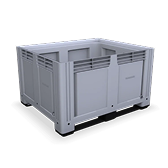
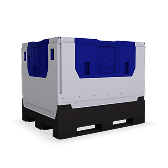
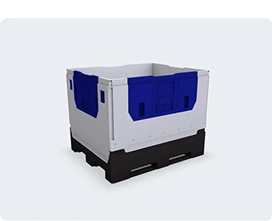
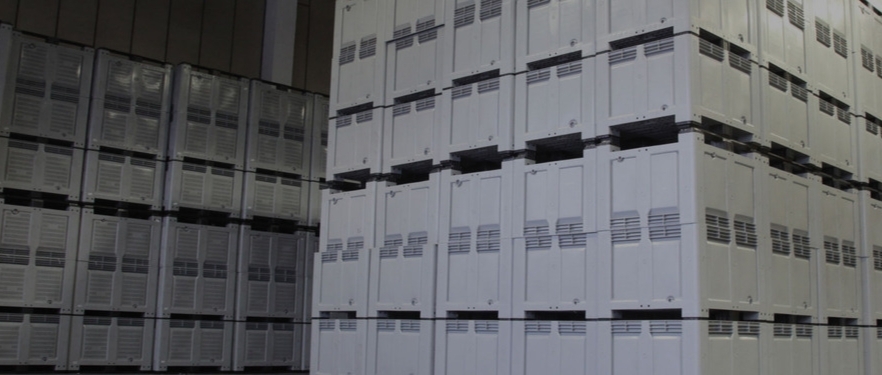
- Plastic box pallets: rigid containers suited to bulk storage and transit.
- Nestable plastic box pallets: nest together when empty, saving valuable floor space.
- Collapsible plastic box pallets: fold flat when not in use, ideal for sites with fluctuating stock levels.
- Plastic storage containers: for smaller items, ingredients, or packaged goods.
- Reusable handling equipment: withstands repeated use across the supply chain.
The benefits go beyond hygiene. Plastic equipment offers easy cleaning, strong moisture resistance, and a long service life, all of which reduce contamination risk while improving operational efficiency. Fewer replacements, fewer breakdowns, and less time spent on deep cleaning all add up over a busy warehouse year.
Across the warehousing of food products, these gains compound quickly once you standardise equipment on a single, hygienic material.
Use Colour-Coded Storage Systems to Improve Food Safety
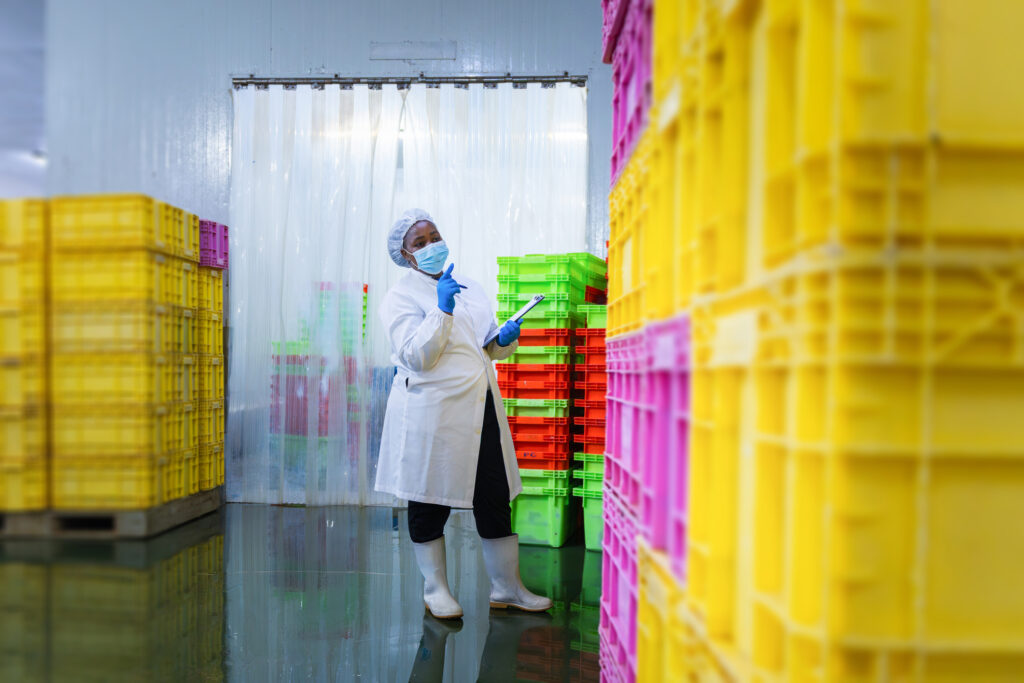
Colour coding is one of the simplest and most effective tools available within food warehousing and distribution. It gives staff an instant visual way to separate different categories of stock, without relying on labels alone.
Businesses commonly use coloured containers to distinguish:
- Raw materials.
- Finished products.
- Allergens.
- Returns.
- Cleaning equipment.
- Packaging.
- Waste.
When teams apply colour coding consistently, it reduces cross-contamination, improves traceability and supports faster picking, since staff can identify the right container at a glance. It also simplifies staff training, as new team members can learn the system quickly without needing to memorise long lists of product codes. Palletower’s plastic pallet collars are available in a range of colours, making them a straightforward way to introduce colour coding into an existing racking or pallet setup.
This kind of visual system is valuable in food-grade warehousing sites that handle multiple product lines or a mix of raw and finished goods.
Best Practices for Warehousing Food Products
Good equipment only gets you so far. The way your team works day to day has just as much bearing on safety and efficiency in food warehousing.
Key practices to build into your operation include:
- FIFO (First In, First Out): rotating stock so older items are used first.
- FEFO (First Expired, First Out): prioritising by expiry date rather than arrival date.
- Dedicated storage zones: keeping different product categories physically separated.
- Product segregation: particularly important for allergens.
- Clear labelling: on every container, pallet, and storage bay.
- Good airflow: to prevent condensation and support consistent temperatures.
- Maintaining access: so stock can be checked and rotated without obstruction.
- Avoiding damaged containers: removing cracked or compromised equipment from use immediately.
- Routine inspections: catching issues before they become compliance failures.
Equipment and layout work hand in hand here. Stackable, nestable plastic box pallets make dedicated zones easier to maintain, while clear, durable labelling on plastic equipment holds up far better than paper labels stuck to timber.
These practices apply just as much to food warehousing and distribution operations moving goods between sites as they do to a single static warehouse.
Cleaning and Maintaining Food Warehouse Equipment
A cleaning schedule is only useful if your team routinely follows it and the equipment lets them carry it out properly. Most food warehousing sites benefit from:
- Set cleaning schedules: covering daily, weekly, and deep-clean routines.
- Routine inspections: checking for cracks, splinters, or wear that could harbour bacteria.
- Replacing damaged equipment: promptly, rather than continuing to use compromised containers.
- Suitable cleaning chemicals: match to the equipment material and the products you store.
- Wash-down procedures: particularly in chilled or high-risk storage areas.
Smooth plastic surfaces reduce cleaning time significantly compared to timber or untreated materials, which absorb moisture and are far harder to sanitise thoroughly. Less time spent cleaning translates directly into more time spent on productive warehouse operations.
Cleaning routines are one of the areas where auditors check food warehousing standards with the most scrutiny, so it’s worth treating equipment maintenance as a compliance task, not just good housekeeping.
Choosing Storage Equipment for Food Warehousing
When you’re comparing options for food warehousing, it helps to evaluate equipment against a consistent set of criteria:
- Material: food-grade plastic is generally easier to maintain than timber or metal.
- Ease of cleaning: smooth, non-porous surfaces speed up sanitation.
- Moisture resistance: particularly important in wash-down environments.
- Durability: equipment needs to withstand daily handling and repeated washing.
- Colour coding: available options such as plastic pallet collars for segregating stock types.
- Stackability: for efficient use of vertical space.
- Nestability: for saving floor space when equipment isn’t in use.
- Load capacity: matches the weight of the products you store.
- Lifecycle cost: not just the purchase price, but the cost over years of use.
- Replacement availability: how easily you can replace damaged units.
- Compatibility: with your existing racking, conveyors, and handling equipment.
Prioritise hygiene performance and total cost of ownership over the lowest upfront price. Equipment that lasts longer and cleans faster will almost always deliver better value across the lifetime of your food warehousing operation.
Businesses that take a strategic approach to food warehousing, rather than simply replacing existing storage, are better positioned to improve hygiene and operational efficiency.
Improve Food Warehousing with Hygienic Storage Solutions from Palletower
Palletower supplies storage equipment that supports modern food warehousing and distribution, from single-site operations to large multi-depot networks. As the UK’s leading supplier of material handling and warehouse storage equipment, we work with businesses across food-grade warehousing, retail, manufacturing, wholesale, and 3PL (third-party logistics) to keep their storage compliant and efficient.
Our range includes:
- Plastic box pallets for bulk storage and transit.
- Nestable plastic containers that save floor space when empty.
- Collapsible plastic box pallets for flexible, fluctuating stock levels.
- Coloured plastic storage boxes to support colour-coded systems.
- Reusable plastic storage equipment built for repeated use.
- Easy-to-clean products engineered around hygiene from the ground up.
- UK stockholding, so equipment is available when you need it.
Choosing the right equipment shouldn’t slow you down. Whether you’re reviewing an existing site or planning a new one, getting food warehousing standards and the warehousing of food products right from the start saves time, cost, and risk further down the line. Our team can help you select hygienic storage equipment suited to your food warehousing applications. Enquire now or contact us to discuss your requirements with a member of the Palletower team.