-
Products
-
![]() Storage & Logistics Equipment
Storage & Logistics Equipment
- All Products
-
Featured Products
Featured Products
- Used Products
-
![]() Racking & Storage Systems
Racking & Storage Systems
- All Storage Systems
- Racking Inspections and Repairs
- Safety, Process & Maintenance
- Warehouse Transfer Rentals
-
![]() Rental Equipment
Rental Equipment
- Equipment To Rent
-
![]() Manufacturing
Manufacturing
- Plastic Box Manufacturing
- Roll Pallet Manufacturing
- Stillages Manufacturing
-
![]() End-to-End Service
End-to-End Service
- The Full Product & Service Offering
-
- Rental
- Industries
- About
- News & Insights
- FAQs



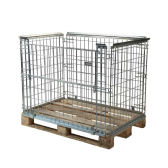








How to Buy Warehouse Equipment at Scale
- Storage Solutions
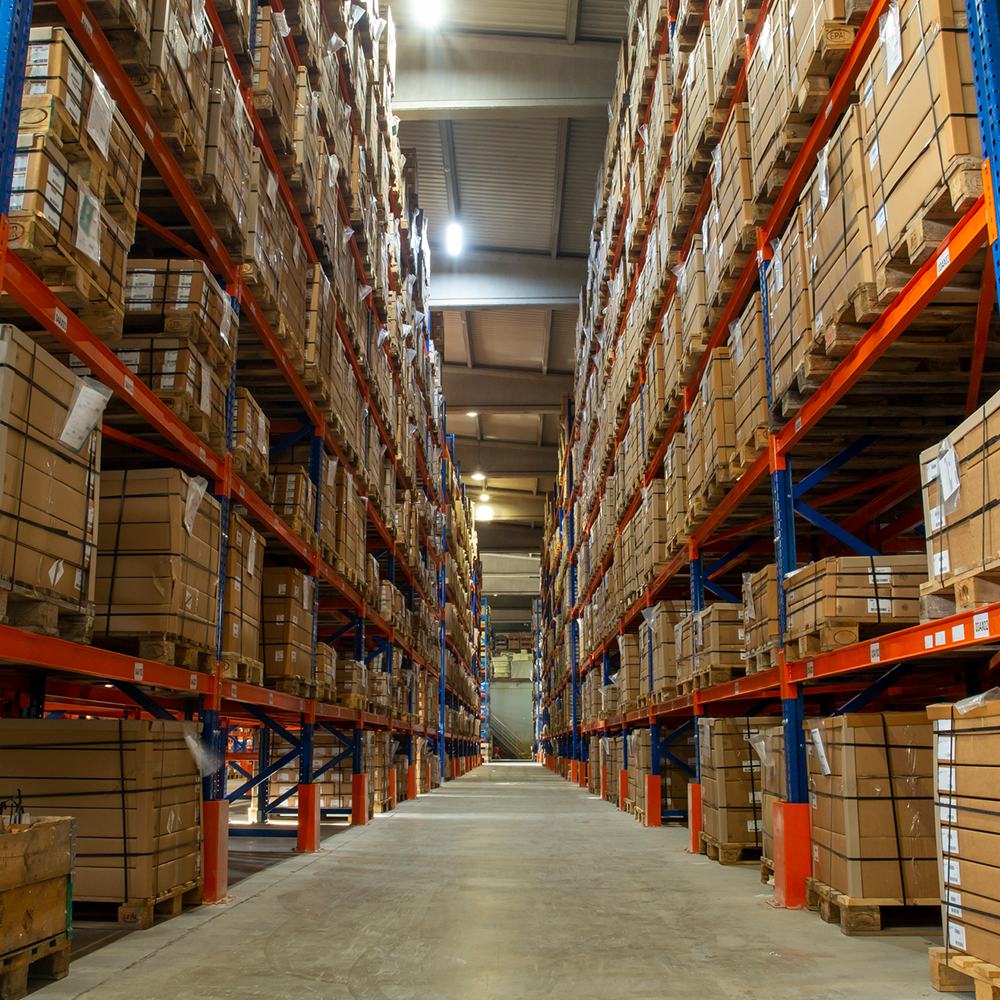
Buying a forklift for one warehouse is simple. Buying warehouse equipment for a network of sites, a high-volume site, or a fast-scaling operation is a different job. The stakes are higher, the spec has to work across more locations, and a poor choice doesn’t just cost you money. It costs you time you don’t have.
This guide is for procurement managers, logistics managers, and business owners sourcing warehouse equipment at that scale. It’s not a product roundup. It’s a checklist of what to demand from a supplier before you sign, so you can walk into supplier conversations with confidence instead of getting caught out later.
Why Buying at Scale is Different
Ordering in volume changes the risk. You become more dependent on a supplier’s stock position to hit your deadlines, and lead times stretch further, so a delay at the supplier’s end doesn’t just slow one order, it can stall goods-in across every site waiting on that shipment. Delivery gets more complex too, as you juggle multiple sites, different access windows, and different site contacts, so one missed slot can knock on to several more.
The cost of getting it wrong also multiplies. One unreliable forklift is an inconvenience you can work around for a day, but an entire network running on the wrong equipment is a much bigger fix, with kit to retrofit or replace across every site while daily operations carry on around you. Because one supplier relationship now has to hold up across dozens of locations rather than just one, a gap in their stock or delivery network won’t stay isolated. It surfaces everywhere at once.
That raises an obvious question: what should you demand from a supplier before committing to a large or multi-site order? The sections below set out exactly that.
Proven Manufacturing and Stock Capability
Ask About In-House Manufacturing
A supplier that owns its own production has far more control over lead times and consistency. A reseller doesn’t. They’re waiting on a third-party factory to deliver, which adds a layer of risk you can’t see or control.
Before you commit to an order, ask for proof, not a claim. That could be a site visit, production capacity figures, or evidence of UK-based manufacturing you can check yourself. If a supplier can’t show you where and how their equipment is made, treat that as a warning sign.
Read more about Palletower’s manufacturing capabilities.
Check Real Stock Levels, Not Just Catalogue Listings
Held stock protects your supply chain when a production line elsewhere goes down. A catalogue listing only tells you what a supplier could theoretically get, it doesn’t tell you what’s sitting in their warehouse right now.
Ask suppliers directly what’s physically in stock, not just what’s “available to order”. The difference matters when you’re trying to hit a rollout deadline across several sites.
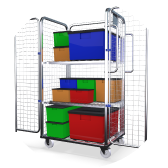
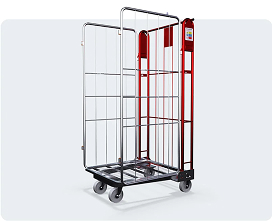
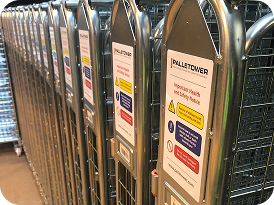
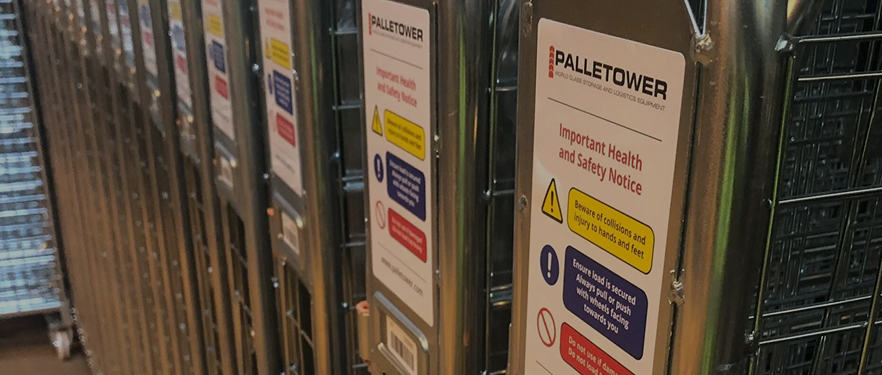
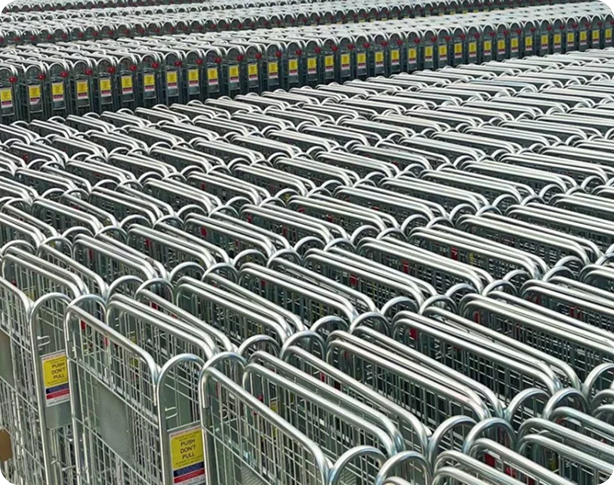
Palletower’s own range of roll pallets and cages is a good example. High-turnover equipment like this needs genuine stock depth behind it, not just a product page.
Bespoke and Standard Product Options
Large operations rarely fit one mould. A supplier who offers both off-the-shelf and custom-engineered equipment gives you options a standard-only catalogue can’t. This matters more as your operation grows, whether that’s new site types, different floor plans, or a move into a new industry.
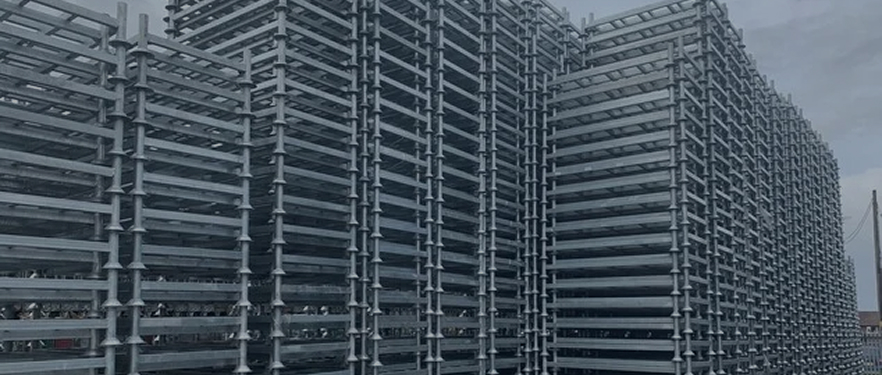
Standard equipment works well when your requirements stay consistent across sites. Bespoke solutions earn their keep when they don’t. A site with restricted floor space might need a different pallet footprint, and a new product range might need handling that a standard cage was never built for.
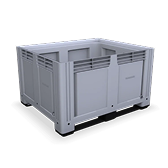
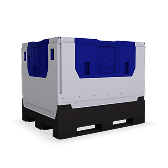
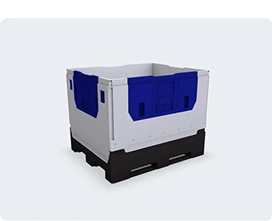
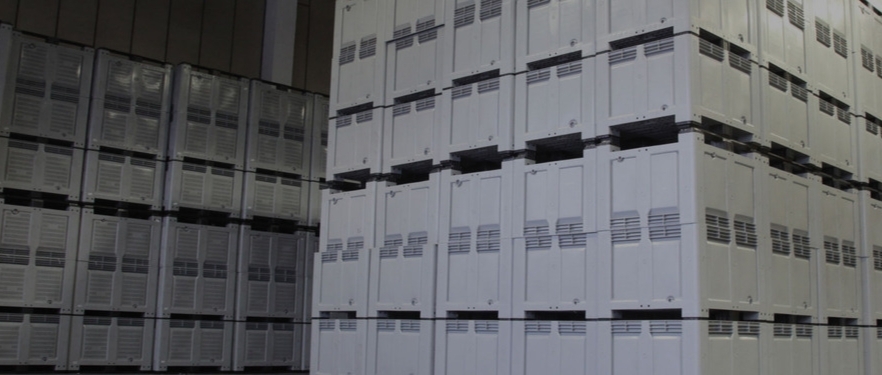
It’s worth looking at ranges built with this flexibility in mind. See nestable roll pallets and collapsible plastic box pallets as standard options, and bespoke storage solutions for anything outside the standard range.
Flexibility Through Rental and Hybrid Models
Not every requirement calls for outright purchase. Seasonal peaks, new site launches, and trial rollouts are all good reasons to rent rather than buy, especially if you’re not yet sure what the long-term need will look like.
For large operations, this isn’t just about saving money. It’s a trade-off between capital committed and flexibility retained. Tying up capital in equipment you only need for a few months a year rarely makes sense when renting is an option.
For many, a hybrid approach often works best: own some equipment, rent the rest. It suits a growing network better than an all-or-nothing purchase and lets you scale up quickly for peak periods without overcommitting the rest of the year. Take a look at rental warehouse storage equipment if this flexibility fits your situation.
Dispatch and Delivery Reliability
Consistent dispatch should be a named requirement on any large or multi-site order, not something you assume will happen, since it’s one of the easiest things for a supplier to overpromise on and one of the hardest to fix once you’re mid-rollout.
In practice, reliable dispatch means three things: realistic lead times that hold up under pressure, clear communication if something slips, and proper coordination across multiple delivery addresses. Ask a prospective supplier how they’d handle a delay across a ten-site order before you find out the hard way.
For a closer look at how delivery works across larger orders, see Palletower’s delivery options and lead times.
Pricing, Payment Terms, and Total Cost
Price should never be the only factor. At volume, that matters even more, because the cost of a bad decision multiplies fast when you’re ordering hundreds or thousands of units.
Ask suppliers about their payment terms, how transparent their quotes are, and what the total cost of ownership looks like against the upfront price. A cheaper quote isn’t always the cheaper option once you see the full picture.
Watch for hidden costs that don’t show up on the headline price, such as:
- Delivery charges per site.
- Minimum order quantities.
- Storage fees.
Get these confirmed in writing before you sign the contract, not after.
Aftercare, Maintenance, and Long-Term Support
Don’t treat a warehouse equipment purchase as a one-off sale. Ask what happens after delivery. How do inspections work? Who handles repairs? Are replacement parts easy to get hold of?
Operator training and ongoing support matter too. They’re part of a genuine long-term partnership, and worth asking about upfront rather than assuming they’re included. For multi-site operations, one point of contact beats managing a different vendor per location.
Palletower’s ongoing maintenance and aftercare service is built around this kind of long-term support, as we know it doesn’t end at delivery.
The Buying Process at Scale, Step by Step
A structured process protects you from most of the risks above. Before committing to a large order, it’s worth working through the following list:
- Get comparable quotes from more than one supplier, on the same spec. That way, pricing and terms are genuinely comparable.
- Visit the factory or facility where possible, not just a showroom. Seeing production in person tells you far more than a brochure.
- Run a trial or pilot order at a smaller volume before you commit to the full rollout, so you can catch issues early.
- Check references from other large-scale or multi-site customers. Single-site testimonials won’t tell you enough.
- Review the contract in detail before signing. Look closely at payment terms, delivery commitments, and what happens if a delivery is missed across a large order.
Questions to Ask Before You Sign a Contract
Take these questions into your next supplier conversation. Each one should be answerable in a single sentence. If it isn’t, that’s worth noting too.
- Can I see your current stock levels, not just what’s listed as available?
- Where is this equipment manufactured, and can I visit the site?
- What certifications and safety testing can you provide as documented evidence?
- How do you handle delivery coordination across multiple sites?
- What happens if a delivery is delayed or missed on a large order?
- What does aftercare and ongoing maintenance actually include?
- Are your quotes fully transparent, with no hidden delivery or storage fees?
- Can I speak to a reference customer with a similar scale of operation?
How Palletower Supports Large-Scale Procurement
Every point above comes down to the same thing: proof, not promises. Palletower is built to answer each of these questions directly, with equipment manufactured in the UK and a UK stockholding of over 500,000 items across more than 100 product lines, so stock depth and dispatch reliability are never left to chance.
With almost 60 years of experience supplying warehousing, retail, and industrial operations, we’ve built our manufacturing, dispatch, and aftercare around the demands that procurement teams raise time and again. Whether you need standard equipment, a bespoke solution, or a mix of purchase and rental, the same team supports you from first enquiry through to long-term aftercare.
If you’re sourcing warehouse equipment at scale, enquire now, and our team will help you choose the right equipment and define the requirements specific to your operation. Find out why choose Palletower, or contact us directly to talk through your next order.