-
Products
-
![]() Storage & Logistics Equipment
Storage & Logistics Equipment
- All Products
-
Featured Products
Featured Products
- Used Products
-
![]() Racking & Storage Systems
Racking & Storage Systems
- All Storage Systems
- Racking Inspections and Repairs
- Safety, Process & Maintenance
- Warehouse Transfer Rentals
-
![]() Rental Equipment
Rental Equipment
- Equipment To Rent
-
![]() Manufacturing
Manufacturing
- Plastic Box Manufacturing
- Roll Pallet Manufacturing
- Stillages Manufacturing
-
![]() End-to-End Service
End-to-End Service
- The Full Product & Service Offering
-
- Rental
- Industries
- About
- News & Insights
- FAQs











How Plastic Pallet Boxes Are Manufactured
- Plastic Pallet Collars
Understanding the plastic box manufacturing process helps businesses make smarter decisions about the storage equipment they invest in. Plastic pallet boxes are used across warehousing, retail, food distribution, automotive, and manufacturing operations because they’re durable, reusable, and built to perform at scale. This article explains how plastics are manufactured into finished pallet boxes, what materials are involved, and why injection moulding is the method of choice for industrial-grade containers. Knowing how plastic is manufactured at an industrial level also helps buyers assess quality, sustainability, and long-term value. Palletower’s UK-manufactured plastic pallet boxes are designed with all of this in mind, focusing on reducing emissions, improving operational efficiency, and delivering durable storage solutions built for the long term.
The Plastic Manufacturing Process
The plastic box manufacturing process begins with converting raw thermoplastic materials into finished products through moulding and forming techniques. For industrial storage equipment, the two most common materials are High-Density Polyethylene (HDPE) and Polypropylene (PP). Both offer a combination of strength, chemical and impact resistance, and low weight that makes them well suited to heavy-duty logistics applications. They’re also fully recyclable, which supports circular economy goals across modern supply chains.
Injection moulding is the most widely used method for producing plastic pallet boxes and containers at scale. It gives manufacturers precise control over shape, wall thickness, and structural reinforcement, making it the right fit for complex, load-bearing designs that need to perform consistently across thousands of cycles. Understanding how plastic parts are manufactured at this level helps procurement teams specify the right products for their operation.
The Plastic Injection Moulding Process
The plastic injection moulding process produces pallet boxes by injecting molten plastic into a precision-engineered mould, where it cools and solidifies into its final form. Each cycle delivers a consistent result, making it ideal for high-volume production. Here’s how each stage works.
Step 1: Material Preparation
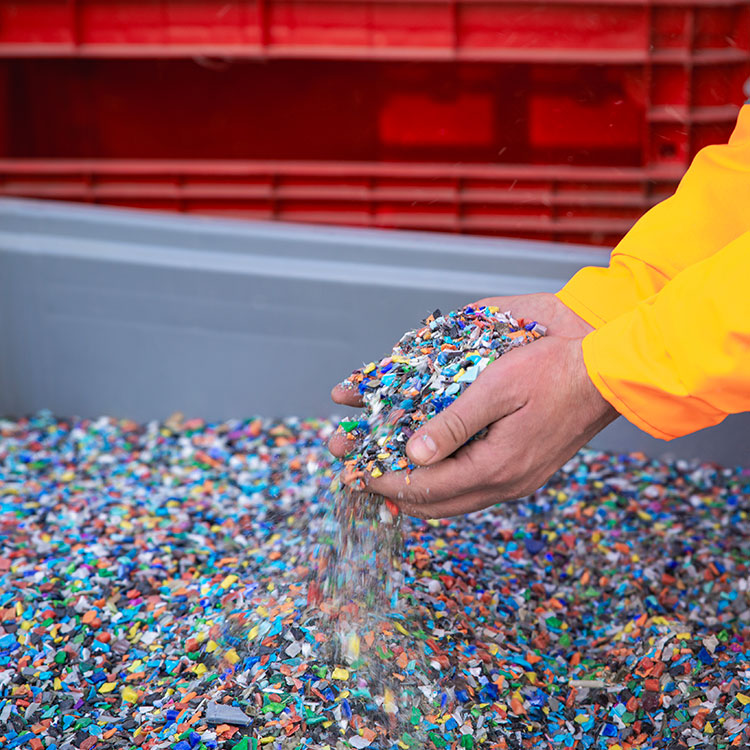
Granules of HDPE or polypropylene are loaded into a hopper at the top of the moulding machine. The grade and quality of the raw material directly affects the durability and load-bearing performance of the finished box.
Step 2: Heating and Melting
The granules feed into a heated barrel, where they melt into a fluid state. Temperature control is critical. Uneven heat causes defects such as warping, shrinkage, or weak points. Automated monitoring systems keep temperatures stable throughout each run, reducing waste and improving consistency.
Step 3: Injection
Molten plastic is pushed into a precision-engineered mould under high pressure. The mould determines the exact shape and structural features of the product, including stacking ridges, fork entry points, and reinforced walls. Modern tooling produces complex designs with tight tolerances and repeatable accuracy.
Step 4: Cooling and Solidification
Cooling channels built into the mould extract heat at a controlled rate. Even cooling prevents warping and internal stress. Once the plastic has fully solidified, the product holds its exact dimensions and is ready for ejection. Efficient cooling cycles keep production times short, making injection moulding well suited to large-scale manufacturing runs.
Step 5: Ejection and Finishing
The mould opens and the finished item is ejected. Runners are trimmed and each unit passes quality control checks for dimensional accuracy, load capacity, and surface finish. The plastic injection moulding process is complete at this point, and products are ready for dispatch.
Why Injection Moulding Is Used for Plastic Pallet Box Manufacturing
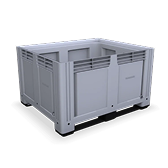
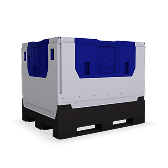
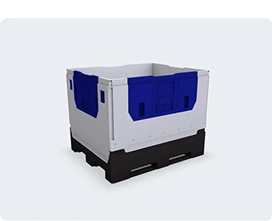
Injection moulding is the manufacturing method of choice for both rigid and collapsible plastic pallet boxes used across industrial storage, warehousing, and logistics applications. It combines speed, precision, and repeatability in a way that few other processes can match at scale.
Precision mould design directly influences wall strength, stackability, weight distribution, and overall durability. A well-engineered mould produces pallet boxes that perform consistently under load, integrate reliably with automated handling systems, and maintain their dimensions across thousands of use cycles.
The key benefits of injection moulding for industrial plastic products include:
- High-volume manufacturing efficiency with short, repeatable cycle times
- Consistent product quality and dimensional accuracy across every unit produced
- The ability to create strong, complex, and durable designs
- Reduced material waste during production
- Lower long-term production costs for repeat manufacturing runs
- The ability to customise products with branding, colours, and bespoke specifications
These advantages make injection moulding particularly well suited to returnable transit packaging (RTP), warehouse storage systems, and supply chain operations where consistency and long service life are essential. Because plastic pallet boxes are lightweight, stackable, reusable, and recyclable, they also help reduce transport emissions across the supply chain.
Key Materials Used in the Plastic Box Manufacturing Process
HDPE
HDPE offers high impact resistance, chemical resistance, and durability in harsh environments. It maintains structural integrity across cold storage, outdoor use, and heavy load cycles. According to Plastics Europe, HDPE is one of the most widely recycled thermoplastics in industrial use, making it a strong choice for businesses with sustainability commitments. Its combination of strength, longevity, and chemical resistance makes it the standard material for rigid plastic pallet boxes used in food distribution, automotive, and manufacturing applications.
Polypropylene (PP)
Polypropylene is lighter than HDPE and offers excellent fatigue resistance, meaning it handles repeated flexing without cracking. It’s fully recyclable and suits returnable transit packaging where weight reduction directly lowers fuel costs and emissions. When considering how plastic parts are manufactured for logistics use, polypropylene is a common choice where payload weight is a key concern.
Sustainability in Plastic Manufacturing
Reusable plastic pallet boxes support circular economy principles in several practical ways. They’re designed for long-term use, cutting reliance on single-use cardboard and wooden alternatives. When a box reaches the end of its working life, it can often be repaired or the material recycled and reprocessed into new products. WRAP estimates that switching to reusable transit packaging can cut packaging waste significantly across supply chain operations.
HDPE and polypropylene are both fully recyclable. Their long service lives reduce replacement frequency and help businesses minimise landfill contributions. Knowing how plastic products are manufactured using these materials makes it easier to assess the environmental credentials of the products you procure.
Palletower’s plastic manufacturing operation is based in the UK, which reduces freight emissions, improves lead times, and gives customers greater supply chain visibility. Stackable and collapsible pallet boxes maximise available vehicle space, and the reduction in overall payload weight directly lowers fuel usage, shipping costs, and carbon emissions across logistics operations. Palletower’s focus on sustainable manufacturing and UK-based production means every stage of the product lifecycle, from materials to dispatch, is designed to reduce environmental impact. How plastics are manufactured in the UK, with shorter supply chains and tighter quality controls, gives businesses a clear advantage over imported alternatives.
Plastic Pallet Boxes vs Traditional Alternatives
Many businesses ask, “How are plastic pallets made?” and “Are they genuinely worth the switch from wood or cardboard?” The plastic injection moulding process produces containers that outperform traditional alternatives across nearly every operational metric. Plastic pallet boxes offer:
- Greater durability and a longer working lifespan
- Resistance to moisture, chemicals, and contamination
- Easy cleaning, making them suitable for food-safe and pharmaceutical environments
- Collapsible and stackable designs that save space in storage and on return journeys
- Lower maintenance and replacement costs over time
UK Plastic Manufacturing with Palletower
The plastic box manufacturing process, when done well, produces storage equipment built to last. Injection moulding delivers the precision, consistency, and scalability that industrial logistics demands, and UK manufacturing adds further advantages in the form of shorter lead times, tighter quality control, and a lower-carbon supply chain. Palletower works with specialist moulding partners, including IPL, one of Europe’s leading injection moulding businesses with six UK facilities, and Horen Group, specialists in sustainable returnable packaging design. Together, this expertise reflects Palletower’s position as a leading provider of storage and logistics equipment, ensuring every product meets the demands of modern industrial operations.
Our range covers rigid plastic pallet boxes, collapsible containers, and customisable solutions for retail, manufacturing, and wholesale operations. You can browse the full range on our plastic box pallets page or read more on our plastic manufacturing pages. Whether you’re new to the category or reviewing your current setup, understanding how plastics are manufactured helps you choose the right product for your specific application.
Ready to find the right solution? Contact us today or enquire now, and a member of our UK team will be happy to help.