-
Products
-
![]() Storage & Logistics Equipment
Storage & Logistics Equipment
- All Products
-
Featured Products
Featured Products
- Used Products
-
![]() Racking & Storage Systems
Racking & Storage Systems
- All Storage Systems
- Racking Inspections and Repairs
- Safety, Process & Maintenance
- Warehouse Transfer Rentals
-
![]() Rental Equipment
Rental Equipment
- Equipment To Rent
-
![]() Manufacturing
Manufacturing
- Plastic Box Manufacturing
- Roll Pallet Manufacturing
- Stillages Manufacturing
-
![]() End-to-End Service
End-to-End Service
- The Full Product & Service Offering
-
- Rental
- Industries
- About
- News & Insights
- FAQs


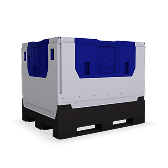
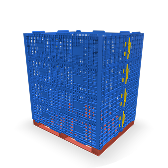
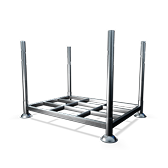

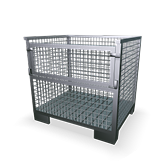










Robotics and pallets for high-density storage systems
- Blog
- Storage Solutions
When inventory demands grow, more and more businesses are turning to high-density storage systems to make the most of their available space.
Robotics plays a key role in making these systems work, but there’s a factor that often gets overlooked, and that’s the pallets themselves. After all, the design and quality of your pallets directly affect how well your automated systems perform.
In this guide, we cover how high-density storage systems work, the role of robotics within them, and why pallet specifications matter more than you might think.
What is a high-density storage system?
High-density storage systems are designed to maximise the use of available space, both vertically and horizontally.
Rather than spreading inventory across wide aisles and low racking, they pack goods into compact grids or deep-lane structures. This means you can store significantly more inventory within the same warehouse footprint.
Common high-density storage formats include:
- Automated Storage and Retrieval Systems (AS/RS)
- Shuttle systems
- Cube-based or grid storage systems
In traditional racking setups, workers or forklifts navigate aisles to access stock directly.
High-density systems have a different approach. Goods are stored in tightly packed configurations that humans can’t easily reach, so robotics takes over the job of storing and retrieving inventory. The result is a dramatically reduced warehouse footprint with a higher storage capacity.
The role of robotics in high-density storage
In a high-density environment, robots handle the tasks that would be impractical or too slow for human workers. They store pallets in dense racking systems, retrieve them on demand, and move goods between storage zones and picking areas.
One of the key principles behind many automated warehouse systems is the goods-to-person model.
Rather than workers walking to collect items, robots bring the relevant pallets or goods directly to a picking station. This speeds up fulfilment and reduces the physical demands on staff. And the performance benefits are significant:
- Faster retrieval times compared to manual picking
- Lower reliance on warehouse labour
- Consistent throughput across shifts, including nights and weekends
Robots in these environments don’t operate independently. They work as part of a coordinated fleet, managed by central software that allocates tasks, avoids congestion, and optimises routes across the warehouse.
How warehouse robotics systems work in high-density environments
Understanding the workflow helps clarify why precision matters at every stage.
Here’s how a typical automated pallet handling process runs:
- Inventory arrives and gets assigned a storage location within the warehouse management system (WMS)
- A robot transports the pallet to its designated position in the storage grid or racking system
- The WMS logs the exact location of every pallet
- When an order is placed, the system identifies the pallet and dispatches a robot to retrieve it
- The robot delivers the pallet to a picking or dispatch station
The technologies that make this possible include LiDAR sensors and cameras for navigation, AI-driven route optimisation, and tight integration with the WMS.
Multi-robot systems require careful coordination to prevent collisions and ensure tasks are allocated efficiently. When everything works in sync, the result is a fast, reliable, and highly scalable operation.
Types of robotics used in pallet-based storage systems
Different robotic systems suit different warehouse setups. The most common types used in pallet-based environments are:
- Pallet shuttle systems: Robots move pallets within deep-lane racking, accessing positions that would otherwise require a forklift
- Autonomous Mobile Robots (AMRs): Navigate freely across warehouse floors to transport pallets between zones
- Automated Guided Vehicles (AGVs): Follow fixed routes and are well suited to predictable, repetitive pallet movements
- Stacker cranes: Operate vertically within aisles to store and retrieve pallets at height
- Robotic palletisers and depalletisers: Handle the loading and unloading of palletised goods at the start or end of the supply chain
Each system has its own requirements when it comes to pallet compatibility, which is why getting pallet specifications right from the start is so important.
Key pallet specifications that impact robotic performance
Pallets are the interface between your goods and your robots. A pallet that’s well designed for automation keeps your system running smoothly. One that is it can cause delays, errors, and unnecessary wear.
Here are the specifications to consider:
Dimensions
Robotic systems are calibrated to handle pallets within precise tolerances. Even small variations in pallet size can cause misalignment, failed pickups, or jams. Consistent dimensions across your pallet inventory are essential for reliable warehouse pallet automation.
Weight capacity
Every robot has a maximum load rating. Pallets need to meet the weight requirements of the goods they carry, and that weight must be distributed evenly. Uneven loading can affect robot stability and lead to handling errors.
Structural integrity
Damaged or warped pallets disrupt automated systems. In high-density environments where robots handle pallets repeatedly throughout the day, structural durability is non-negotiable. A pallet failure mid-operation can trigger downtime across the entire system.
Surface quality
Sensors used for pallet detection rely on consistent, uniform surfaces. Rough, uneven, or damaged deck boards can interfere with sensor readings, slowing retrieval times or causing handling errors.
RFID and barcode compatibility
Robot-compatible pallets need to support tracking. RFID tags or barcodes embedded in or applied to the pallet allow the WMS to log and locate every unit within the storage system.
Pallet design considerations for high-density automation
Beyond basic specifications, certain design features make pallets genuinely well suited to automated pallet handling environments:
- Precision manufacturing: Tight tolerances reduce positioning errors when robots pick up and set down pallets
- Four-way entry: Allows robots to access the pallet from any direction, which is important in dense configurations where approach angles may be limited
- Consistent deck spacing: Ensures robotic forks align reliably every time
- Durability under repeated handling: high-density systems involve frequent movement, so pallets must withstand heavy cycling without degrading
- Fire safety compliance: Important for insurance and regulatory requirements in automated warehouses
- Stackability and load stability: Prevents goods from shifting during robotic transport, reducing the risk of damage or system interruptions
Challenges and considerations when implementing robotics in high-density storage environments
Introducing robotics into a warehouse isn’t without its challenges. Understanding the key considerations up front helps businesses plan effectively and reduce the risk of costly disruption.
- Initial investment: Robotic systems require capital expenditure, and upgrading existing pallet inventory to meet automation standards adds to that cost
- Transition period: Moving from a mixed fleet of pallets to a standardised set takes time and planning
- Supplier consistency: Every pallet in the system needs to meet the same specification, which means working with a reliable supplier who can deliver at scale
- Ongoing maintenance: Pallet condition needs monitoring over time, as repeated handling can cause wear that affects performance
- System compatibility: Pallets, robotics, and racking must all be aligned to work together correctly
To manage these challenges effectively, businesses should:
- Audit your current pallet types and conditions before you begin
- Confirm pallet compatibility with your chosen robotics systems
- Train staff on handling and maintenance procedures
- Consider a phased implementation to reduce disruption to existing operations
Industry applications
High-density robotic storage isn’t limited to one sector. Businesses across a range of industries are using automated pallet handling to improve efficiency:
- E-commerce fulfilment centres: High order volumes demand fast, accurate pallet storage and retrieval across thousands of SKUs
- Retail distribution hubs: Bulk inventory needs managing quickly and reliably to keep shelves stocked
- Cold storage warehouses: Robotics reduces human exposure to extreme temperatures while maintaining throughput
- Manufacturing logistics: Palletised components can be delivered just-in-time to production lines, reducing buffer stock and improving flow
In each of these environments, the combination of the right robotics system and the right pallet specification is what makes high-density storage viable at scale.
Building efficient automated warehouses with the right pallet solutions
In summary, it’s clear robotics and pallet design need to work together. A state-of-the-art automation system will still underperform if it’s handling pallets that aren’t built for the job.
Equally, a well-specified pallet fleet can’t compensate for a poorly configured robotic system. Businesses that align both elements, the automation technology and the load carriers, build warehouses that are faster, more reliable, and easier to scale.
Getting there starts with evaluating your current pallet inventory and ensuring it meets the demands of your chosen robotics setup.
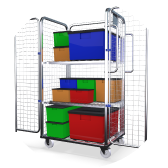
Palletower offers roll pallets for automated warehousing designed to work within high-density robotic environments. Get in touch with our team to discuss your storage requirements and find the right pallet solution for your system.