-
Products
-
![]() Storage & Logistics Equipment
Storage & Logistics Equipment
- All Products
-
Featured Products
Featured Products
- Used Products
-
![]() Racking & Storage Systems
Racking & Storage Systems
- All Storage Systems
- Racking Inspections and Repairs
- Safety, Process & Maintenance
- Warehouse Transfer Rentals
-
![]() Rental Equipment
Rental Equipment
- Equipment To Rent
-
![]() Manufacturing
Manufacturing
- Plastic Box Manufacturing
- Roll Pallet Manufacturing
- Stillages Manufacturing
-
![]() End-to-End Service
End-to-End Service
- The Full Product & Service Offering
-
- Rental
- Industries
- About
- News & Insights
- FAQs


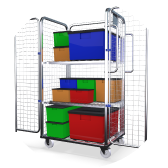
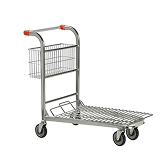
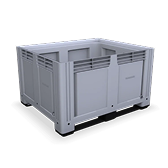










Impossible to ignore: The case for robotics in warehouse storage and item handling
- Blog
- Roll Pallets
- Storage Solutions
Did you know robotics in warehouses improve order fulfilment speeds by up to 300%, can deliver 99% accuracy rates in picking and sorting, and have the potential to reduce labour costs by 30% over the next 5 years?
These numbers are significant in any industry, but in warehouses, where the demand for next-day delivery and operational efficiency is ever-increasing, they’re impossible to ignore.
Below, we cover what robotics are, how they’re used, the benefits they deliver, and the key considerations to keep in mind before implementing them in your warehouse.
What is warehouse automation and robotics?
Warehouse robotics refers to programmable machines and intelligent systems that automate the storage, movement, picking, and retrieval of items.
They’re often powered by AI, sensors and software, which enable these machines to respond to your warehouse’s unique demands, adapt to change and make real-time decisions to keep your operations moving efficiently. For example, autonomous mobile robots (AMRs) can reroute themselves in real time to avoid congestion on the warehouse floor.
The terms automation and robotics are often used interchangeably, but there are key differences:
- Basic automation covers fixed systems with a single, set function such as conveyor belts, roller tracks and static sorting equipment. They’re reliable and cost-effective, but they can’t adapt to changes in layout, product type or demand.
- Warehouse robotics goes further. These are adaptable, often mobile systems that can sense their environment, respond to obstacles and handle a much wider range of tasks. They’re what make genuinely flexible, high-throughput warehousing possible.
Why robotics is transforming warehouse operations
Robotics can deliver accuracy rates exceeding 99.9%, but improved precision isn’t the only way they’re transforming warehouses.
They can also provide:
- Increased speed and throughput: Automated picking systems can improve order fulfilment speeds by up to 300%, allowing operations to process far more orders without adding headcount.
- Lower labour costs and reduced workforce dependency: Automation directly reduces reliance on manual labour, helping operations scale without the recruitment, training and retention challenges that come with a growing headcount.
- Enhanced safety: Removing people from repetitive, physically demanding tasks reduces injury risk and the costs that follow. In fact, warehouses that have adopted automation have seen a 25% reduction in workplace injuries.
- 24/7 productivity with minimal downtime: Unlike a human workforce, robotic systems don’t fatigue. When operations are running extended hours or managing unpredictable demand spikes, that consistency has real value.
What are the key uses of robotics in warehouse storage and item handling?
Warehouse robots aren’t a single technology; they’re a toolkit to help streamline various tasks and challenges you may face.
Each application can target a specific part of the operation, and together they can transform how a facility stores, moves and fulfils goods.
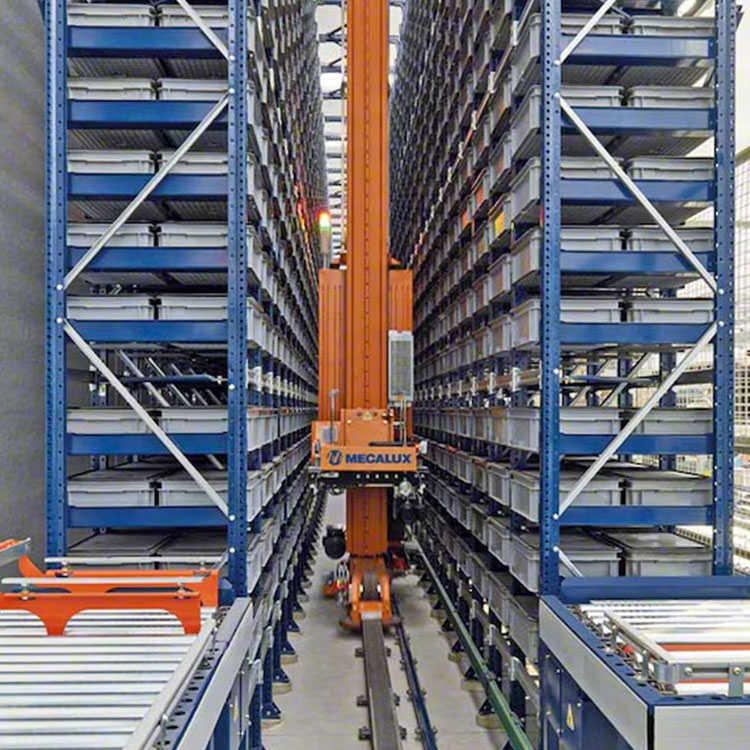
- Automated storage and retrieval (AS/RS): Robots store and retrieve goods from high-density racking systems, making full use of vertical space that manual operations can’t efficiently reach. This allows facilities to hold more stock without increasing their footprint.
- Goods-to-person picking: Rather than sending workers to walk the aisles, robots bring the inventory to them at a fixed workstation. Walking can account for up to 50% of a picker’s time in a manual warehouse, so eliminating that travel has a significant impact on throughput.
- Palletising and depalletising: Robotic arms stack and unstack goods with consistency and precision, taking on one of the most physically demanding tasks in the warehouse and reducing the risk of injury or product damage.
- Sorting systems: Robots organise parcels, totes and items by destination, SKU or order — processing high volumes quickly and accurately at a pace that manual sorting can’t match.
- Inventory management: Robots and drones equipped with barcode scanners and RFID readers carry out continuous stock checks, keeping inventory records accurate in real time without disrupting the wider operation.
- Internal transport: Robots move goods between zones — from goods-in to storage, and from storage to packing and dispatch — reducing the need for manual handling at every stage of the fulfilment process.
The types of warehouse robots
Robots serve many different functions in warehouses. Here’s a breakdown of the main types and what each one is built for.
AS/RS (automated storage and retrieval systems)
The backbone of high-density warehousing. AS/RS covers a range of technologies — including cube storage robots, shuttles, miniloads and vertical lift modules — each designed to store and retrieve goods automatically.
Cube storage robots, for example, manage densely packed inventory bins with speed and precision, making the most of available space in facilities where every square metre counts.
Mobile robots
Robots built to move goods around the warehouse floor. This category includes both AGVs, which follow fixed routes using magnetic strips or floor markings, and AMRs, which navigate freely using sensors and AI.
Both replace the need for manual transport between zones, though AMRs offer greater flexibility in dynamic environments.
Robotic arms
Precision machines that pick, pack and palletise. Fitted with interchangeable end-effectors, robotic arms can handle a wide range of products and are increasingly enhanced with computer vision to identify and sort items accurately.
They’re a common fixture at AS/RS workstations, taking on tasks that would otherwise require significant manual labour.
Drones
Aerial robots used primarily for inventory management. Drones navigate tall racking structures to scan barcodes and RFID tags, carrying out stock checks quickly and without disrupting ground-level operations — a practical alternative to manual audits in large-footprint facilities.
Automated forklifts
Forklifts that load and unload pallets without a driver. Using predefined paths or advanced vision systems, they operate autonomously in receiving, storage and dispatch areas, improving throughput and reducing the risk of handling incidents.
Conveyors
One of the most established forms of warehouse automation. Belt conveyors, roller conveyors and sortation systems transport goods along fixed routes, keeping material flowing efficiently between inbound, storage, picking and dispatch zones.
Automated cranes
Heavy-duty machines designed for high-bay storage environments. Automated cranes move and stack large, heavy loads at heights that manual equipment can’t safely reach, making them well-suited to operations with significant vertical storage capacity.
How warehouse robots work
Behind every warehouse robot is a combination of hardware, software and real-time data that allows it to operate safely, efficiently and at scale.
Here’s how it comes together:
Navigation
Robots find their way around the warehouse using sensors, cameras and mapping technology.
AGVs follow fixed paths marked by lines, tracks or wires, while AMRs use SLAM (Simultaneous Localisation and Mapping) technology to move freely and adapt to changes in their environment without needing a predefined route.
Sensing and interaction
Onboard sensors allow robots to detect obstacles, identify goods and operate safely alongside people.
Barcode scanners and RFID readers are commonly used to verify items during picking and placing tasks, keeping accuracy high throughout the process.
Data processing
Robots connect to a central software system that sends instructions and receives live updates on their activity. This system integrates with the WMS, continuously optimising robot actions to keep the operation running efficiently.
Machine learning and AI
More advanced systems use AI and machine learning to improve over time — analysing patterns, predicting demand and planning optimal routes and picking sequences. The more data they process, the more efficient they become.
Collaboration
Robots can work alongside other robots and human workers simultaneously. Collaborative robots, or cobots, are specifically designed for this, taking on repetitive or physically demanding tasks while people handle more complex decision-making.
Task execution
Depending on their design, warehouse robots pick items from storage, transport goods between zones, sort items by order or destination, and pack outbound shipments.
Some are purpose-built for a single task; others are versatile enough to handle several.
Charging and maintenance
Robots return autonomously to charging stations when battery levels drop or use swappable battery packs to minimise downtime.
Operational data is continuously monitored to flag potential issues early, supporting predictive maintenance before problems affect performance.
What are the benefits of robotics in warehouse storage?
The operational benefits of warehouse robotics compound over time. Here’s what well-implemented systems consistently deliver:
- Faster order fulfilment: Automated picking, sorting and dispatch processes handle higher volumes at greater speed, helping operations meet tight delivery windows and keep customers satisfied.
- Space optimisation: High-density storage solutions like AS/RS make full use of vertical space, allowing facilities to hold more stock without expanding their footprint.
- Scalability during peak periods: Robotic systems handle demand spikes without the recruitment, training and reliability risks that come with scaling a manual workforce at short notice.
- Lower operational costs over time: While upfront investment is significant, the long-term reduction in labour dependency, error rates and product damage typically delivers a strong return.
- Data-driven continuous improvement: Every movement a robot makes generates data. Over time, that data gives operations teams the visibility to identify inefficiencies, refine processes and plan more accurately.
What are the challenges and considerations to keep in mind?
Robotics isn’t a quick fix, and it’s worth being clear-eyed about what successful implementation actually involves:
- High initial investment: Hardware, software, infrastructure upgrades and integration work all carry significant upfront costs, particularly for smaller operations weighing the ROI case.
- Integration complexity: Connecting robotic systems to existing WMS, ERP and infrastructure platforms takes time and technical resource, and is often the most complex part of any deployment.
- Maintenance and technical expertise: Robotic systems require ongoing maintenance and, in many cases, specialist knowledge to service and troubleshoot. These are capabilities that need to be built or brought in.
- Workforce adaptation: Automation changes roles rather than simply replacing them. Staff need time and training to operate and oversee new systems, and managing that transition well is critical to getting value from the investment.
- Cybersecurity and system reliability: As warehouse systems become more connected, the attack surface grows. Ensuring robust cybersecurity protocols and contingency plans for system downtime are increasingly important considerations.
Real-world applications and industry examples
Warehouse robotics is already in use across a wide range of sectors. Here’s how different operations are putting it to work:
- E-commerce fulfilment: High-volume fulfilment centres use AMRs and goods-to-person systems to handle rapid order picking across thousands of SKUs, meeting the next-day and same-day delivery expectations.
- Retail distribution: Retailers are automating inventory handling in distribution centres to improve stock accuracy, reduce manual labour and keep shelves and online channels replenished in sync.
- Manufacturing: Warehouses supporting production lines use robotics to manage component storage, move goods between stages and palletise finished products for dispatch — keeping supply flowing without bottlenecks.
- Third-party logistics (3PL): 3PL providers are investing in robotics to offer clients scalable capacity without expanding headcount, with Robotics-as-a-Service (RaaS) models making automation more accessible to mid-tier operators by converting large capital costs into manageable operating expenses.
Is warehouse robotics right for your business?
Warehouse robotics can deliver significant operational gains, but it isn’t a one-size-fits-all solution.
The right approach depends on your current setup, growth plans and the complexity of your operation.
Here are the key factors to consider:
Warehouse size and layout
Larger facilities with high storage density often see the biggest gains from automation, particularly where vertical space is underutilised. However, smaller warehouses can still benefit from targeted solutions like mobile robots or goods-to-person systems.
Order volume and throughput requirements
High and consistent order volumes make a stronger case for automation. If your operation regularly experiences peak demand or rapid growth, robotics can help you scale without continually increasing headcount.
SKU range and complexity
Warehouses handling a wide variety of products — particularly those with different shapes, sizes or storage requirements — may need more advanced or flexible robotic systems to manage that complexity effectively.
Cost vs return on investment (ROI)
While upfront costs can be significant, the long-term savings in labour, improved accuracy and increased throughput often offset the initial investment. The key is taking a long-term view and modelling ROI based on your specific operation.
Partial vs full automation
Full automation isn’t always necessary. Many warehouses start with partial automation — such as automating picking or internal transport — before expanding into more integrated systems as needs evolve.
Strategic planning and phased implementation
Successful adoption rarely happens overnight. A phased approach allows you to test, learn and scale, reducing risk while ensuring systems integrate smoothly with existing processes.
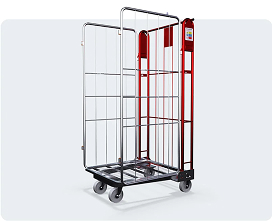
Get roll pallets designed for robotic and automated warehousing from Palletower
As warehouse automation continues to evolve, the equipment that supports it also needs to keep pace. After all, robotics relies on compatible, well-designed storage and handling solutions to perform at its best.
That’s where Palletower’s roll pallets come in.
Designed with modern warehousing in mind, they support both manual and automated environments, making them a practical choice for businesses transitioning towards robotics or already operating automated systems.
With the right roll pallet solution, you can:
- Improve compatibility with automated handling systems
- Streamline internal transport between warehouse zones
- Reduce product damage through secure, stable storage
- Support scalable operations as automation expands
Whether you’re taking your first steps into automation or optimising an existing robotic setup, having the right physical infrastructure in place is essential.
Explore Palletower’s range of roll pallets for automated warehousing to ensure your operation is built for efficiency today, and ready for what comes next.