-
Products
-
![]() Storage & Logistics Equipment
Storage & Logistics Equipment
- All Products
-
Featured Products
Featured Products
- Used Products
-
![]() Racking & Storage Systems
Racking & Storage Systems
- All Storage Systems
- Racking Inspections and Repairs
- Safety, Process & Maintenance
- Warehouse Transfer Rentals
-
![]() Rental Equipment
Rental Equipment
- Equipment To Rent
-
![]() Manufacturing
Manufacturing
- Plastic Box Manufacturing
- Roll Pallet Manufacturing
- Stillages Manufacturing
-
![]() End-to-End Service
End-to-End Service
- The Full Product & Service Offering
-
- Rental
- Industries
- About
- News & Insights
- FAQs












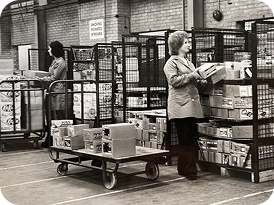
Scale from manual to robotic handling: How robotic material handling can improve your warehouse efficiency
- Blog
- Storage Solutions
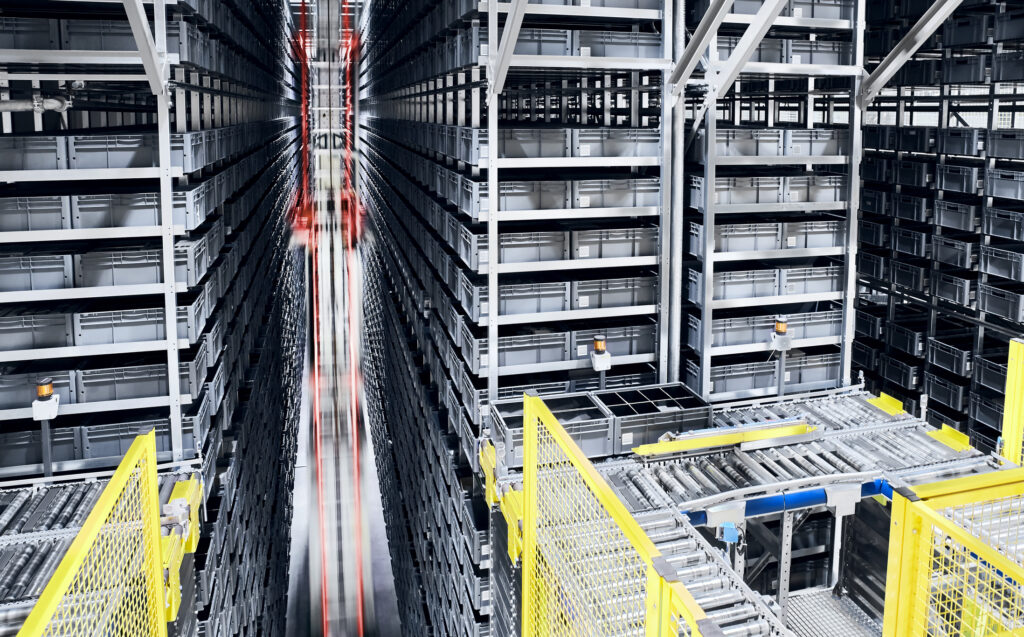
With case studies reporting up to a 70% reduction in operational costs and a 200-300% increase in productivity, it’s no wonder many businesses are turning to robotic handling. If implementing robotic handling is something you’re considering, you’ll probably have a few questions in mind, such as what can it do for your business, how it works, and what its limitations are.
Below, we answer these questions to help you make an informed decision.
What is robotic material handling?
Material handling is the movement, storage, protection, and control of goods throughout a facility.
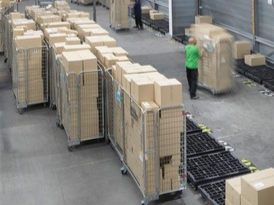
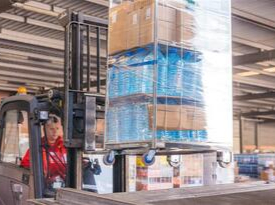
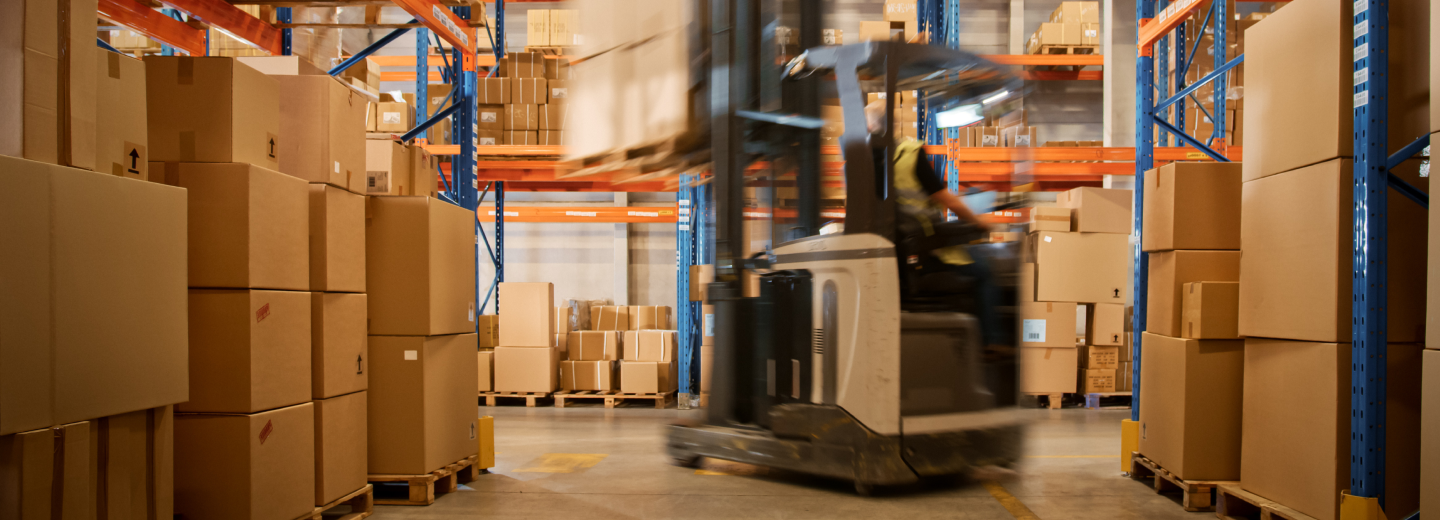
For a long time, this has been done by people using equipment like forklifts, pallet trucks, and roll cages. Now, robotic material handling can replace or support these manual processes with automated systems, including industrial robots, autonomous mobile robots (AMRs), automated guided vehicles (AGVs), and smart conveyors.
It’s worth noting, though, that the shift from manual to robotic material handling doesn’t always happen at once.
Many businesses start with a single automated process, such as pallet wrapping or goods-in scanning, before gradually expanding automation across their warehouse. Others may move straight to a largely automated setup if they’re building a new facility from scratch.
Either way, the goal remains the same: moving goods through an operation faster, more accurately, and more safely.
How do material handling robots work?
Material handling robots use a combination of integrated technologies to move goods accurately and efficiently in industrial environments. These technologies include:
- Navigation systems that use sensors, cameras, and lasers to map surroundings and identify object locations. A central control system then directs the robot to collect and transport materials to the correct destination. While many robots operate using pre-programmed routes, some can navigate independently using real-time sensor data.
- Robotic arms, conveyors, and grippers that enable the robot to lift, hold, and move a wide range of materials and goods. Multi-axis robotic arms can extend, rotate and bend to access items and transfer them between locations, while adjustable grippers and claws allow objects of different shapes and sizes to be handled securely.
- Advanced software that connects the robot’s mechanical and control systems, enabling automated operation. Programming tools are used to define routes, manage speed and force, and coordinate the sequence of movements required to complete material handling tasks.
How do you transition to robotics in material handling?
Moving from manual to robotic processes is often made easier by breaking the transition into stages, rather than attempting a full-scale transformation all at once. A phased approach can help reduce disruption, manage costs, and give teams time to adapt to new technologies and workflows.
A good starting point is to assess your current operations and identify bottlenecks, repetitive tasks, error-prone processes, and physically demanding activities. These are often the strongest candidates for automation. Manual workflows can also create hidden inefficiencies that aren’t always obvious at first, such as time lost walking between pick locations, inconsistent processes between shifts, delays caused by human error, and limited visibility of stock locations in real time.
Once these areas have been identified, businesses can begin prioritising automation opportunities based on operational goals. For example, some organisations may focus on increasing throughput and order accuracy, while others may be more concerned with reducing manual handling risks, improving scalability during peak demand, or lowering long-term labour costs.
Many companies begin with a smaller pilot project before expanding automation across a wider operation. This could involve introducing autonomous mobile robots (AMRs) in a single warehouse zone, automating pallet movement, or using robotic picking systems for a specific product line. Starting small allows businesses to test how robotic systems integrate with existing workflows, warehouse management systems, and staff processes before committing to larger-scale deployment.
Infrastructure and system compatibility should also be reviewed early in the process. Factors such as warehouse layout, floor conditions, charging points, Wi-Fi coverage, safety requirements, and software integration can all affect how successfully robotics can be implemented. In many cases, robotics work best when integrated with warehouse management systems (WMS) and inventory tracking software to provide greater visibility and coordination across operations.
Training and employee involvement are another important part of the transition. Robotics are often introduced to support workers rather than replace them entirely, particularly in tasks involving repetitive movement, heavy lifting, or long-distance transport within warehouses. Ensuring staff understand how the systems work, how to operate alongside them safely, and how their own roles may evolve can help improve adoption and reduce resistance to change.
Over time, businesses can gradually expand automation into additional areas once the initial systems have proven effective. This staged approach allows companies to scale robotics in line with operational growth while building confidence in the technology, and generating clearer returns on investment.
What are the benefits of robotic material handling?
When implemented effectively, robotic material handling can improve how your warehouse operates. Here’s what you can expect:
- Fewer errors: Automation can reduce human error in repetitive tasks, although accuracy still depends on data quality, system configuration, and sensor performance.
- Longer operating hours: Robots can operate beyond standard shift patterns, though they still require maintenance, supervision, and (for mobile robots) charging cycles.
- A safer working environment: Automating repetitive lifting and transport tasks can reduce the risk of musculoskeletal injuries and workplace accidents.
- Better use of space: Some automated storage systems, such as shuttle or ASRS solutions, enable denser storage and more efficient use of warehouse space.
- Greater operational visibility: Automated systems generate detailed data on movement, throughput, and bottlenecks, supporting ongoing optimisation and decision-making.
What are the challenges of robotic material handling?
Robotic material handling is a significant investment, and it’s not without its complexities. Here’s what to plan for:
- High upfront investment: Purchasing and implementing robotic systems requires significant capital. ROI depends on throughput, labour costs, and operational scale.
- Integration complexity: Legacy systems may not easily connect with modern robotics platforms. Integration can require system upgrades, middleware, or process redesign.
- Ongoing costs: Maintenance, software updates, and technical support can be substantial and should be factored into the total cost of ownership.
- Change management: Teams need training to work effectively alongside automation, and processes often need to be adapted.
- Not all processes are suitable for automation: Lower-volume, highly variable, or complex tasks may still be more effectively handled by people.
What are the applications of robots in material handling?
Robotic systems are already doing the heavy lifting across a wide range of warehouse and production environments:
- Warehouse picking and packing: Robots can assist with picking, sorting, and order fulfilment, often as part of goods-to-person systems.
- Machine tending: Robots load and unload equipment and transfer items between processes.
- Inventory scanning: Autonomous robots can capture real-time stock data, improving inventory accuracy and visibility.
- Internal transport: AMRs and AGVs are commonly used to move goods between zones, reducing time spent on manual transport tasks.
Roll pallets built for robotic and automated warehousing
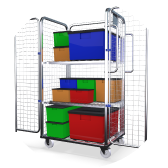
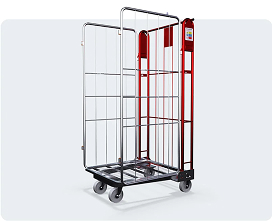
The case for robotics and automation is clear. But for automated systems to perform at their best, every part of your operations also needs to be compatible, including your roll pallets. That’s where Palletower can help. We configure our roll pallets to suit the demands of automated and semi-automated warehouse environments, helping your business to streamline internal transport between warehouse zones, reduce product damage through secure, stable storage and support scalable operation as your automation expands.
Keen to learn more? Get in touch with our UK-based team today.