-
Products
-
![]() Storage & Logistics Equipment
Storage & Logistics Equipment
- All Products
-
Featured Products
Featured Products
- Used Products
-
![]() Racking & Storage Systems
Racking & Storage Systems
- All Storage Systems
- Racking Inspections and Repairs
- Safety, Process & Maintenance
- Warehouse Transfer Rentals
-
![]() Rental Equipment
Rental Equipment
- Equipment To Rent
-
![]() Manufacturing
Manufacturing
- Plastic Box Manufacturing
- Roll Pallet Manufacturing
- Stillages Manufacturing
-
![]() End-to-End Service
End-to-End Service
- The Full Product & Service Offering
-
- Rental
- Industries
- About
- News & Insights
- FAQs


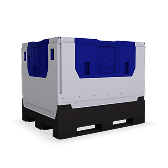
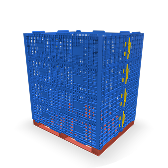
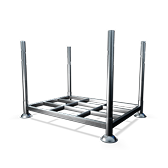

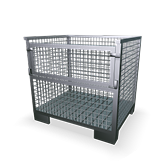









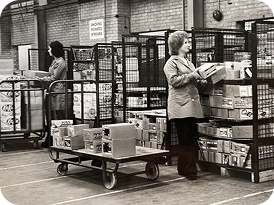
Warehouse Automation and robotics for retail and food – why is it needed? What are the challenges? And how can it be hugely beneficial for your business?
- Blog
- Storage Solutions
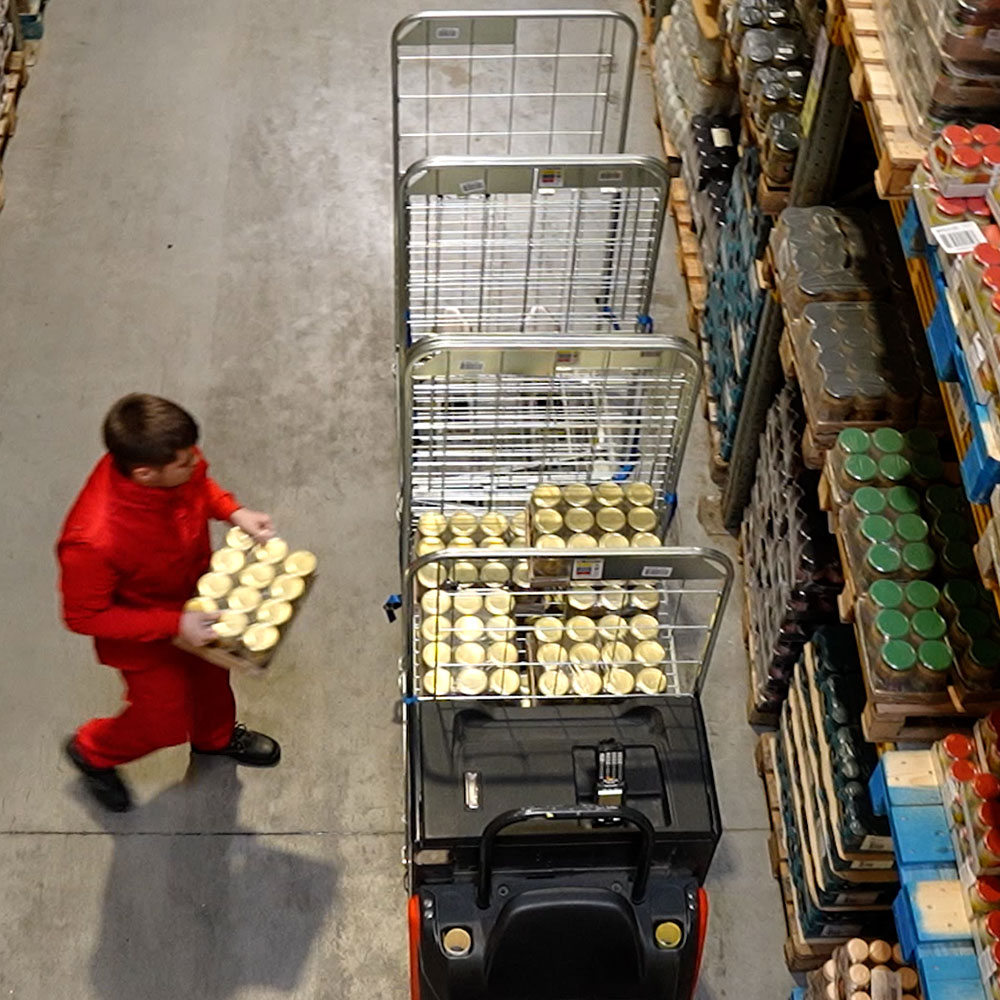
Automation isn’t slowing down, and when you consider the potential gains, you can certainly see why. Businesses that have embraced automation have seen significant improvements, including fulfilment speeds up to three times faster and accuracy rates of up to 99%.
Those are big numbers in any industry. But in food and retail, where razor-thin margins, strict compliance demands and customer expectations for next-day delivery are all essential, they’re particularly compelling.
So, what does warehouse and storage automation look like in these sectors? What are the real challenges, and how are robotics and smart pallet systems helping businesses? That’s what we’re here to discuss.
Why are food and retail among the most complex sectors to automate?
It’s largely because food and retail warehouses deal with a level of complexity that other industries simply don’t face.
For one, there’s the sheer variation these industries handle. From oversized boxes to fragile items, both sectors typically manage a wide range of products daily and often within the same workflow. In food, the complexity increases further. A single facility might include ambient, chilled and frozen zones, with each requiring different processes and equipment.
Then there’s shelf-life pressure. Stock is often rotated using FIFO (first in, first out) or FEFO (first expired, first out) principles. That means automation systems need to prioritise precision and traceability, as well as speed.
Demand volatility adds another layer, too. Seasonal peaks, promotional activity, and shifts in online demand can rapidly change order profiles. This can place sudden pressure on systems to scale up without disruption or delay, meaning they need to be able to flex instantly without creating bottlenecks or errors.
Why there’s pressure on food and retail warehousing to adopt automation
The shift to omnichannel retail has fundamentally changed warehouse expectations.
Same-day and next-day delivery are now expected as standard. Orders also no longer come from a single channel. They arrive simultaneously from stores, online platforms, marketplaces and click-and-collect systems, all pulling from the same inventory pool. That alone creates constant pressure on accuracy and speed.
At the same time, labour constraints are tightening. Recruitment challenges, turnover and rising operational costs make it harder to scale throughput with people alone. The traditional response of adding more headcount is no longer reliable or cost-effective.
SKU complexity is also increasing. Warehouses now handle thousands of product types with different sizes, shapes, packaging formats and storage requirements.
Inventory visibility is another challenge. In retail, stock must be synchronised in real time across stores, warehouses and online platforms. In food, strict regulations add further pressure, influencing how products are stored, handled and tracked throughout the supply chain.
The role of robotics in food and retail warehouses
At this stage, you might be wondering how robotics works in a warehouse setting and what it really changes day to day.
Here’s how it’s typically used:
Picking and packing. Robots can support or fully automate the picking and packing of orders. This can speed up fulfilment and reduce human error in high-volume environments.
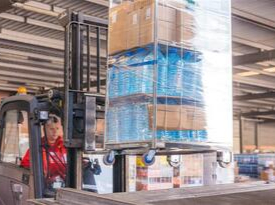
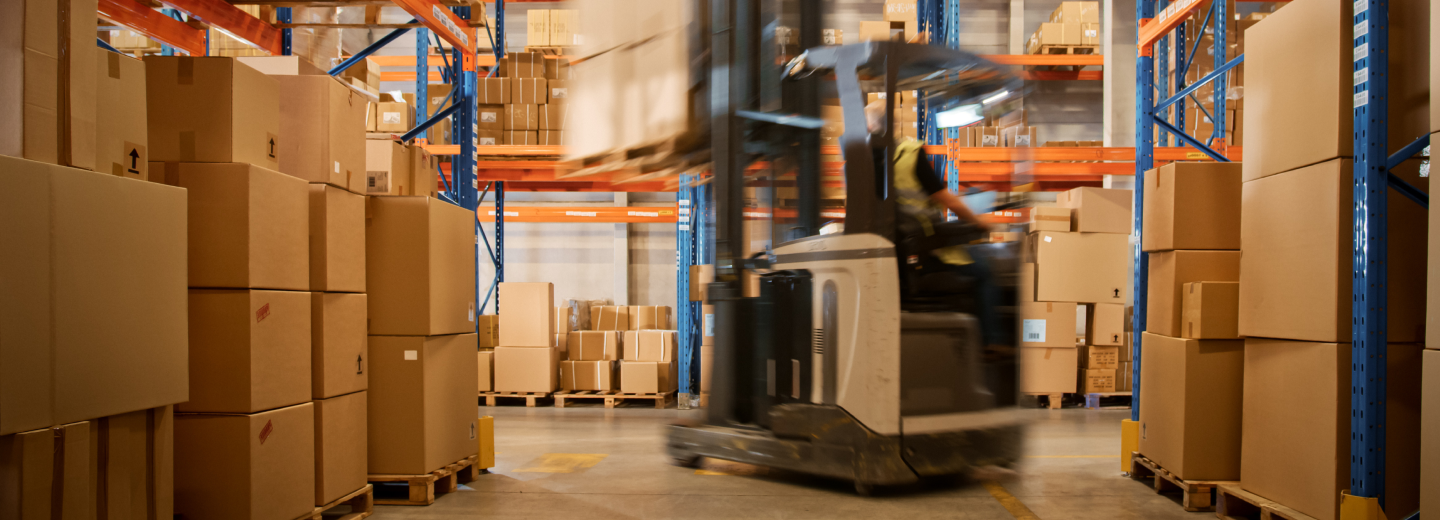
Pallet transport and storage. Automated vehicles move pallets around the warehouse efficiently, reducing reliance on manual forklifts and keeping goods flowing smoothly between storage and dispatch.
Sorting and dispatch. Robotics helps organise and route goods correctly before they leave the warehouse. This can improve accuracy and reduce delays in outbound delivery.
Goods-to-person systems. Instead of staff walking long distances to collect items, products are brought directly to pick stations, saving time and improving productivity.
How usage differs by sector:
Retail focuses on fast, high-frequency picking of smaller individual items across a large number of SKUs, where speed and reliability are key.
Food focuses more on bulk handling and strict process control, often within temperature-controlled environments where compliance and consistency are essential.
So, we know what robotics in these industries can do, but what are the broader benefits?
Faster fulfilment. Warehouses can process higher order volumes in less time, even during peak demand.
Greater accuracy. Automation reduces picking and handling errors, improving order quality and inventory control.
Less manual handling. Staff spend less time on repetitive physical tasks, improving safety and allowing focus on higher-value work.
If you work in the food industry, what are the key considerations to keep in mind?
Food warehousing isn’t like most other operations. It performs under very strict regulatory and hygiene demands that shape how goods are handled, stored and moved.
Hygiene and sanitation are essential. Equipment needs to be made from non-porous materials, cleaning cycles are frequent, and contamination control is constant.
Regulatory compliance is non-negotiable. Operations must meet HACCP standards and wider food safety requirements.
Temperature control adds further complexity. Many food facilities span ambient, chilled and frozen zones simultaneously, each with its own handling requirements.
Traceability is essential throughout. Batch tracking and audit-ready visibility need to be built into how compliant food operations run.
Equipment quality matters. Damaged or poor-quality handling equipment isn’t just an efficiency problem. It’s a contamination risk too.
Process consistency ties it all together. Standardised handling across every touchpoint helps protect product integrity from intake to dispatch.
How can robotics help?
In a food warehouse, it’s not enough to consider efficiency alone – compliance is another huge factor to bear in mind. Let’s go through how robotics can help bring control to your operation.
Robotic systems reduce contamination risk. This is achieved by minimising unnecessary human contact with food products, supporting higher hygiene standards across the operation.
Handling becomes more consistent. Goods are moved and stored in a standardised way every time, reducing variability and protecting product integrity.
Temperature zones aren’t a barrier. Robotic systems maintain stable performance across ambient, chilled and frozen environments, where manual processes can vary.
Traceability improves significantly. Integration with barcode and RFID systems provides real-time tracking from intake through to dispatch.
And compliance becomes easier to maintain. Better control and accuracy across the operation helps meet the strict standards food businesses are held to.
If you work in the retail industry, what are the key considerations to keep in mind?
Retail warehousing moves fast, and the demands on it keep growing. Operations need to handle enormous product variety, serve multiple channels at once and adapt quickly when demand shifts.
SKU complexity is significant. Retailers manage thousands of individual product types, each with different sizes, weights and handling needs, often within the same facility.
Omnichannel fulfilment raises the stakes further. Stores, online orders and click-and-collect all draw from the same inventory pool, and each channel has its own speed and accuracy expectations.
Demand is rarely predictable. Promotions, seasonal peaks and shifting consumer behaviour can change order profiles quickly, putting pressure on systems to keep up.
Returns add another layer of operational complexity. Processing returned goods efficiently and getting them back into available stock is a challenge many retailers underestimate.
Speed and accuracy can’t slip. Fulfilment expectations have risen sharply, and there’s little tolerance for delays or errors regardless of order volume.
How can robotics help?
Retail warehousing needs systems that can flex without losing performance. Robotics can provide the speed, consistency and scalability to keep up with modern retail demands.
High SKU complexity becomes manageable. Robotic systems can process large volumes of varied products efficiently, even across highly diverse inventory environments.
Demand spikes don’t have to mean disruption. Automation absorbs fluctuations in order volume without needing proportional increases in headcount.
Multichannel fulfilment stays consistent. Whether it’s a store replenishment, an online order or a click-and-collect pick, robotics supports accurate, timely fulfilment across every channel.
Returns processing improves. Better visibility and flow control helps returned goods move back into available stock faster and with fewer errors.
The strain on teams reduces. Removing repetitive, physical tasks frees staff to focus on higher-value work, improving both productivity and job satisfaction.
Overall, operations become more resilient. Better equipped to stay stable even as demand patterns shift quickly.
What are the key benefits of robotics and automation in food and retail storage?
Adopting robotics and automation can bring measurable benefits across your operation:
Faster order fulfilment. Higher throughput means orders go out quicker, improving customer satisfaction and meeting tighter delivery windows.
Greater inventory accuracy. Real-time visibility reduces stock discrepancies and supports better decision-making across the supply chain.
Reduced labour dependency. Automation lowers reliance on manual headcount, helping to offset rising labour costs and reduce exposure to staffing shortfalls.
Improved safety. Less manual handling means fewer injuries and a safer working environment for warehouse teams.
Better use of space. High-density automated storage makes more efficient use of the warehouse footprint, reducing the need for expansion.
Stronger compliance and traceability. Particularly in food, automated tracking and process control make it easier to meet regulatory requirements and respond to audits.
The challenges of robotics and automation in food and retail storage
Automation offers clear advantages, but it’s not without its challenges. From initial costs to integration with existing systems, there are several practical challenges businesses need to plan for before implementation.
The initial investment is significant. Robotics and the infrastructure needed to support it require substantial upfront capital, which can be a barrier for smaller operations.
Integration with existing systems takes time. Connecting automation to warehouse management systems and legacy technology is rarely straightforward and often requires specialist support.
Not everything is easy to automate. Robots can struggle with irregular, soft or fragile goods, and edge cases like damaged packaging or unusual items can disrupt otherwise smooth processes.
Mixed picking requirements add complexity. The difference between full pallet movements and single-item picking demands flexibility that not all systems are designed to handle.
Highly optimised systems can lack adaptability. There’s often a trade-off between throughput and flexibility. A system built for efficiency at scale may not respond well to sudden changes in product mix or order profile.
Environmental constraints apply. Cold storage, high humidity and strict hygiene requirements all place additional demands on equipment and system design.
Pallet inconsistency is a common and underestimated problem. Non-standard pallets reduce efficiency, increase the risk of handling errors and are often incompatible with automated systems altogether.
How to optimise food and retail automation with robotics-ready roll pallets
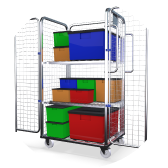
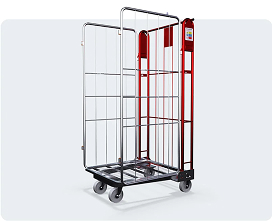
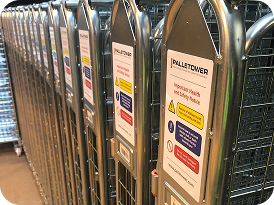
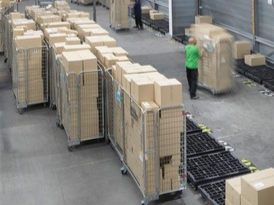
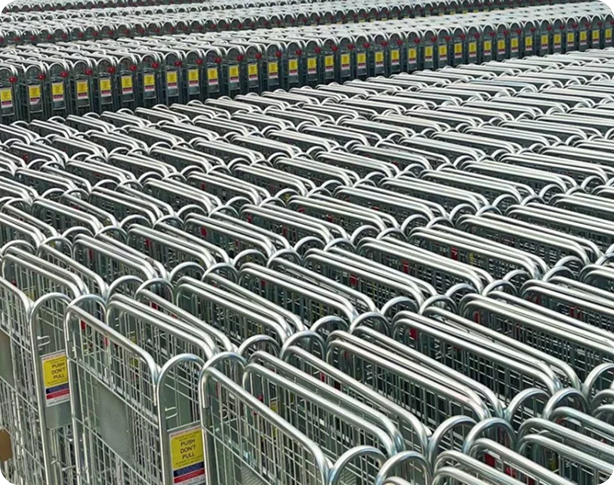
Robotics doesn’t work in isolation. For automation to perform at its best, the equipment it works with needs to be up to the job, and that often starts with the pallet. Robotics-ready roll pallets are designed to work with automated systems. They offer improved load stability for mixed goods, more reliable handling in high-movement environments and consistent compatibility with the requirements of automated systems.
At Palletower, every roll pallet is built to order. We manufacture to exacting custom dimensions, so your pallets integrate seamlessly with your automation setup. And because we hold all products in stock, if you need them urgently, they’re available for immediate dispatch.
Get in touch with the Palletower team to find out more.