-
Products
-
![]() Storage & Logistics Equipment
Storage & Logistics Equipment
- All Products
-
Featured Products
Featured Products
- Used Products
-
![]() Racking & Storage Systems
Racking & Storage Systems
- All Storage Systems
- Racking Inspections and Repairs
- Safety, Process & Maintenance
- Warehouse Transfer Rentals
-
![]() Rental Equipment
Rental Equipment
- Equipment To Rent
-
![]() Manufacturing
Manufacturing
- Plastic Box Manufacturing
- Roll Pallet Manufacturing
- Stillages Manufacturing
-
![]() End-to-End Service
End-to-End Service
- The Full Product & Service Offering
-
- Rental
- Industries
- About
- News & Insights
- FAQs


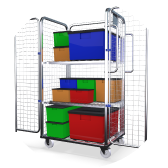













When to Use Hypacages in Your Warehouse Operations
If you’re storing irregular, loose, or awkwardly shaped stock, you’ve probably found that a standard pallet doesn’t always hold everything together. Perhaps your picking areas need faster replenishment, you’re dealing with seasonal overflow that’s eating up valuable floor space, or goods that won’t stay put once you’ve stacked and strapped them. In situations such as this one, it’s worthwhile finding out if a better tool for the job exists.
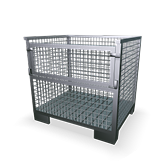
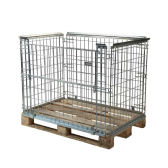
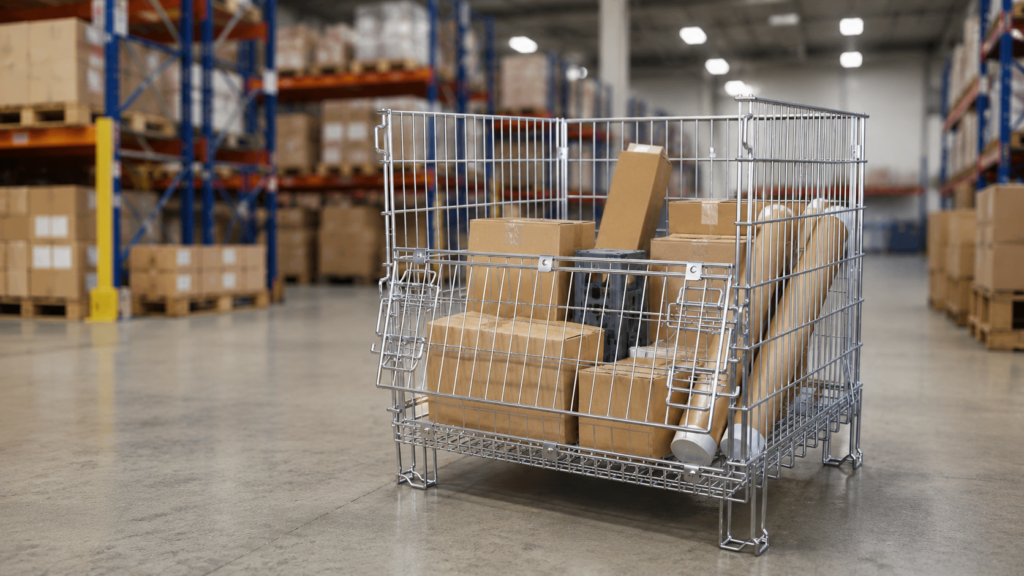
This is where hypacages come into play. A hypacage is a collapsible wire mesh cage that stores and transports goods above ground without needing a pallet.
This guide will walk you through real scenarios where a hypacage outperforms a standard pallet, racking, or stillage, so you know if it’s the right solution for your specific storage or picking problem.
Hypacages are also called cage pallets, cage stillages, wire mesh storage cages, stackable mesh cage pallets, collapsible cage pallets, or stillages; different names for the same solution. For a fuller introduction before diving in, explore our guide to what a hypacage is.
When Hypacages Beat Standard Pallets
Standard pallets are great for standard loads; uniform and stackable. But the moment your stock is loose or irregular, standard pallets work against you instead of for you.
A hypacage solves this issue by securing and containing the goods within its wire mesh sides. The containment eliminates any need for extra wrapping, strapping, or packaging to hold everything in place, reducing workforce effort and packaging waste.
Most hypacages match the standard Euro-pallet footprint of 1,200 mm by 800 mm, so they fit straight into your existing racking, vehicles, and floor space without any redesign.
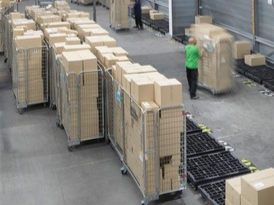
Loose components, off-cuts, and mixed-size stock are where hypacages really earn their keep, since a flat pallet can’t hold them together on its own. A manufacturing line dealing with constant off-cuts, or a distribution centre managing mixed SKUs, would spend the day restacking and resecuring a pallet load. A hypacage skips that entirely: it’s a case of load it and move it.
When Hypacages Beat Racking or Shelving
Racking makes complete sense when your storage needs are fixed and predictable. But if your inventory shifts with the seasons, or you’re not in a position to commit to a permanent installation, racking can become a costly and inflexible choice.
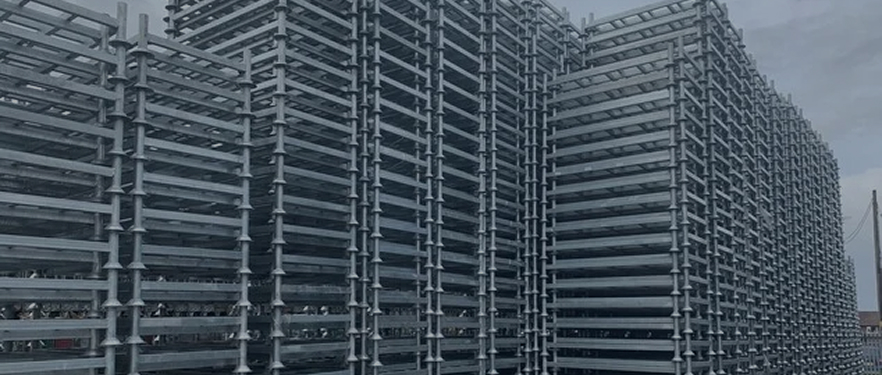
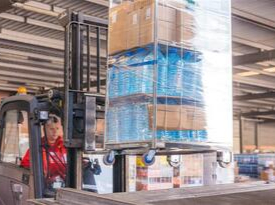
Hypacages give you that flexibility. They stack up to four or five high without the need for pallet racking, meaning you get vertical storage density without the fixed infrastructure. When you no longer need the capacity, hypacages collapse flat, freeing up floor space.
This makes hypacages an excellent fit for fast-changing inventory or seasonal SKUs, where your layout needs to flex month by month, rather than staying locked in place. For inventory that won’t sit still, a hypacage gives you racking’s storage density without the fixed installation cost or commitment.
Picking and Replenishment Environments
In a busy picking area, speed and visibility matter as much as storage. This is where the “picking cage” use case comes into its own.
A hypacage with a half-drop gate gives your team quick access to stock without needing to lift a whole cage down or dig through a pallet. For high-turnover SKUs, that quick access adds up over a shift.
The open mesh sides also help with stock visibility. Your team can see at a glance when a cage is running low, rather than pulling it out to check. And where you’re storing mixed stock, hypacages with internal dividers let you organise several product lines within a single cage, cutting down the time spent searching or resorting during a pick.
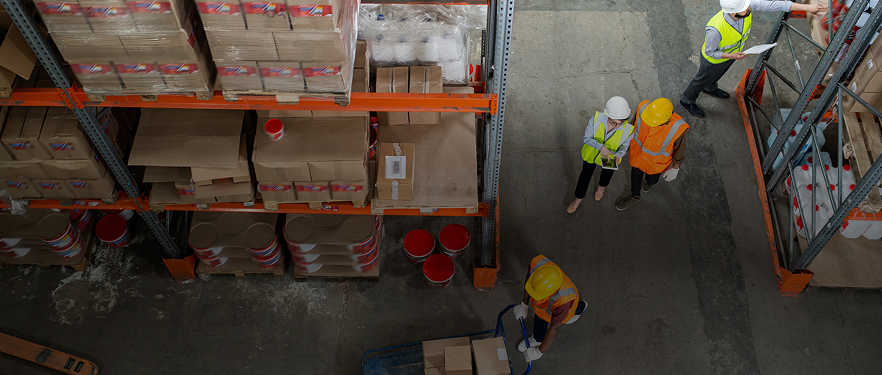
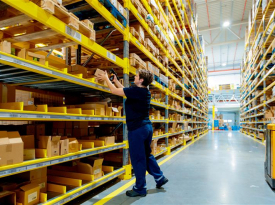
This setup suits retail, wholesale, and food distribution environments particularly well, where SKU counts are high, and replenishment needs to keep pace with demand. Picture a busy warehouse picking area during peak season, where pickers are working through hundreds of orders a shift and can’t afford to stop and dig through a pallet to locate what they need. A hypacage with a half-drop gate and clear stock visibility allows them to grab, check, and move on without breaking pace.
Bulky, Awkward, or Heavy Loose Goods
When you’re dealing with bulky, awkward, or genuinely heavy items, a standard hypacage may not be built for the task at hand. In such instances, heavy-duty hypacages are preferred. They carry a higher load capacity, giving you the same containment and ease of handling, but with the strength to match. For larger or bulkier loads that require further internal space and strength, jumbo hypacages are your best option.
Reverse Logistics and Space-Efficient Transport
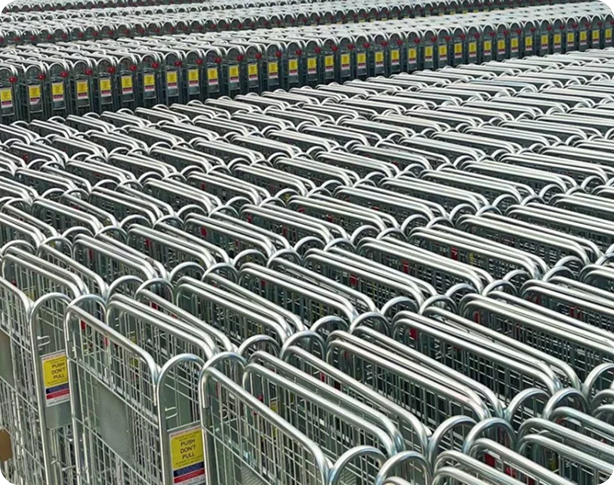
Storage isn’t the only instance in which hypacages earn their keep. Once a load is empty, hypacages fold flat, which makes them a strong fit for reverse logistics. This matters the most in Returnable Transport Packaging (RTP) setups, where empty cages need to travel back as much as full ones travel out. A cage that folds flat takes up a fraction of the vehicle space that a rigid pallet or stillage would, thereby cutting the cost and carbon output of every return journey.
This space-saving trait makes them popular in operations moving goods between a distribution centre and stores or sites regularly, where empty cages would otherwise eat into return-journey capacity. What does this mean for you? Fewer wasted journeys, and more room on every trailer for what actually needs moving.
Protecting Higher-Value or Sensitive Stock
Open mesh sides work well for most stock, giving good ventilation and letting your team see contents at a glance. But when you’re storing higher-value or sensitive goods, that same openness can become a liability.
This is where a security lid or lockable option comes in handy. It restricts access to the cage without sacrificing the ventilation and visibility that standard mesh sides provide, since only the top is covered rather than the whole cage.
Stock that’s genuinely worth protecting, such as electronics, pharmaceuticals, designer goods, or any other theft-sensitive goods you store above ground, needs this security feature the most. Adding a lockable lid gives you that extra layer of security without changing how the rest of your storage or picking process works.
Renting vs Buying a Hypacage
A hypacage doesn’t have to be a permanent purchase. For seasonal peaks, trial periods, or short-term projects, renting gives you the capacity without the commitment.
Renting scales with demand. Bring in extra cages for a peak period, then hand them back once it’s over, without capital sitting idle in equipment you only need for a few months a year. It also lets you test hypacages in your operation before you commit to buying.
Buying suits the opposite scenario: a hypacage that’s become a fixture, whether that’s a dedicated picking cage on the warehouse floor or ongoing storage for stock you handle all year.
If you’re not sure which one fits yet, consider starting with hypacage rental options and scale up to purchasing once the use case is proven.
Hypacages vs Other Storage: a Quick Comparison
Every storage solution has its own place. Below highlights how hypacages stack up against the alternatives, and where each solution wins.
- Hypacage – Best for – Loose, irregular, or mixed-size stock that won’t stack safely on its own.
- Standard pallet – Best for – Uniform, stackable loads that don’t need containment.
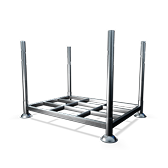
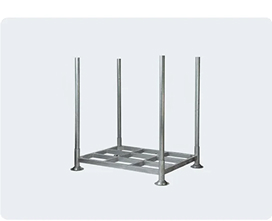
- Stillage – Best for – Heavier or bulkier loads needing a rigid, non-collapsible structure.
- Racking – Best for – Fixed, long-term storage where the layout won’t change.
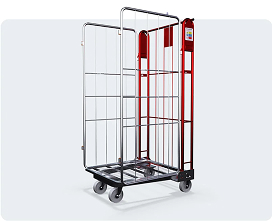
If your stock doesn’t fit neatly into any of these, stillages are often the closest alternative worth considering, particularly for loads that need more rigidity than what a hypacage can offer.
How to Choose the Right Hypacage for Your Operation
Once you know how a hypacage suits your use case, the next question is ‘which one?’ A few factors will point you to the right fit:
- Load weight: lighter cages start from a few hundred kg, while heavy-duty options carry ratings of over a tonne.
- Stack height needed: how many cages high your space and operation can support.
- Indoor vs outdoor use: whether the cage needs to withstand exposure to the elements.
- Security requirements: whether a standard open-mesh design is enough, or if a lockable lid is needed.
- Temporary vs permanent need: whether renting or buying makes more sense for how long you’ll use it.
Working through these points before you place an order means you end up with a cage that fits the job, rather than one you’ve under-specified or overpaid for.
Palletower’s Hypacage Range
Everything covered above maps directly onto Palletower’s own range. Standard hypacages cover general loose and mixed-size stock, heavy-duty hypacages handle higher load capacities, and jumbo hypacages give you extra capacity for larger or bulkier loads.
Whichever use case matches yours, you’re not locked into buying outright. Rental, purchase, and lease options are all available, so a seasonal picking problem can be solved with a rental, while a permanent fixture on your warehouse floor makes more sense as a purchase.
Once you’ve matched your use case to the right range, getting hold of a hypacage is straightforward. Enquire now and our team will talk through load, quantity, and rental or purchase options with you, so you end up with equipment suited to your operation rather than a generic order. If you’re still deciding, find out why you should choose Palletower for your next order, or contact us directly if you’ve got a specific requirement to work through.